The truth layer for AI visibility.
One platform across the whole loop, measure what AI says about your brand, diagnose why, act to fix it, and prove it moved demand. Five engines, built to current AEO/GEO best practice and aligned with Google’s latest spam policies. Plain English throughout. No specialist required.
At a glance
- Zicy is an AI-visibility platform that tracks how AI answer engines mention, cite, and recommend your brand across ChatGPT, Gemini, Perplexity, Google AI Overviews, and Google AI Mode.
- It runs one loop: measure your AI visibility, diagnose where you are losing the answer, act on the gaps, and prove the impact.
- Core metrics include brand mention coverage, citation rate, AI share of voice, and average AI ranking, with the source behind every citation.
- You can see how you stand against named rivals and where the highest-value topics and queries are still open.
- Setup is pasting your website URL; Zicy writes the questions to track.
One loop: measure, diagnose, act, prove.
The lead module at each stage, the full set is below.
AI Visibility
The core scoreboard, brand mention coverage, citation rate, AI share of voice and average ranking, per engine, over time.
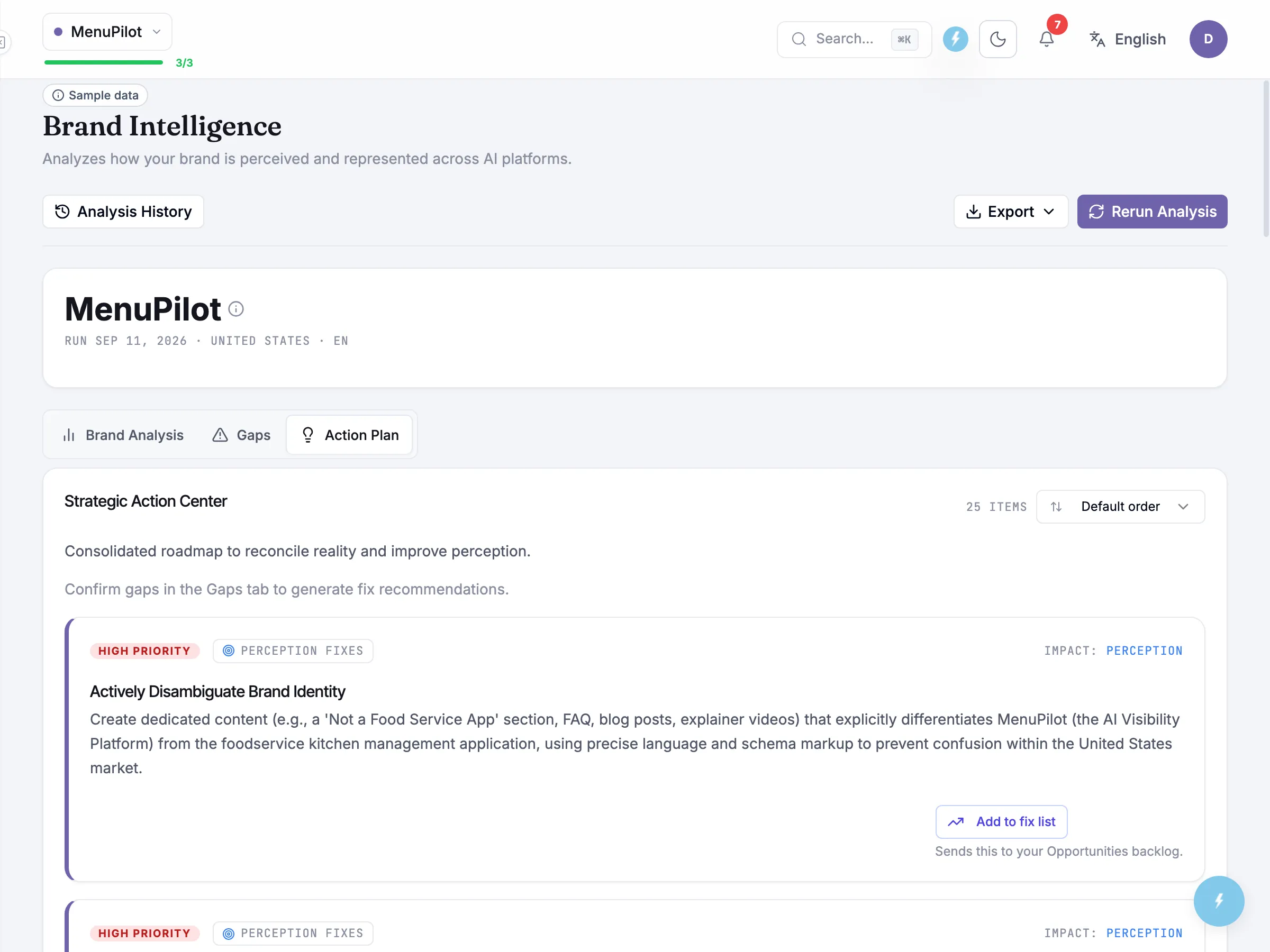
Brand Intelligence
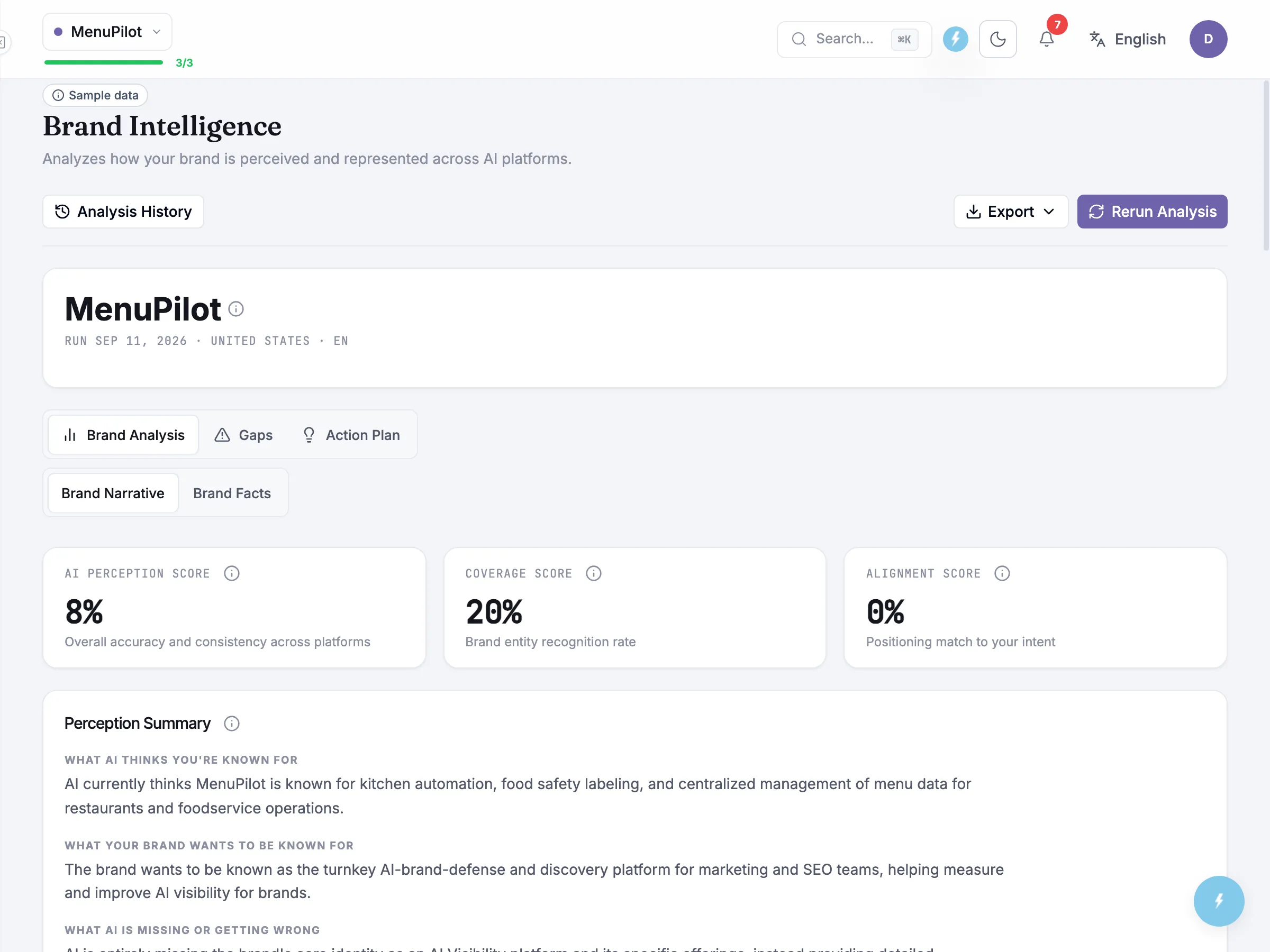
Perception, the AI Reality Score (fact-check / hallucination), the entity graph, and a prioritised action plan.
Take Action tools
GBP Optimizer, content, schema and llms.txt tools. Every output is something you publish; nothing goes live without you.
Impact Tracker
Each change you ship, dated, on the same chart as your AI visibility, with Site Traffic connecting it to demand.
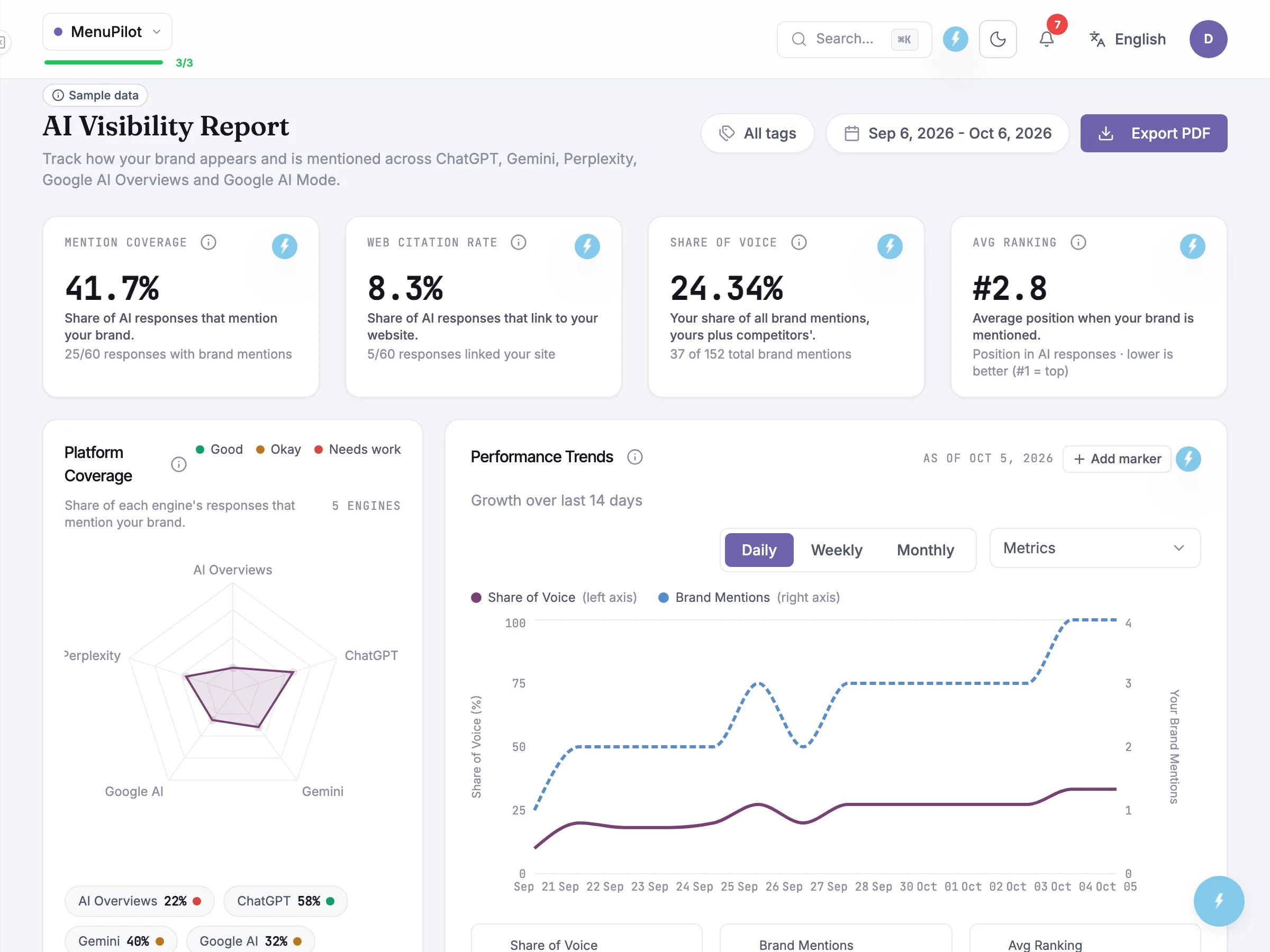
Four numbers, every engine, every day.
Tracked continuously, reported board-ready.
Brand Mention Coverage
How often your brand is named in the answer.
Citation Rate
How often your brand is explicitly cited or linked.
AI Share of Voice
Your share of category mentions versus tracked rivals.
Average AI Ranking
Where you appear within the answer.
Every module, grouped by loop stage.
The whole platform, organised the way the work actually runs.
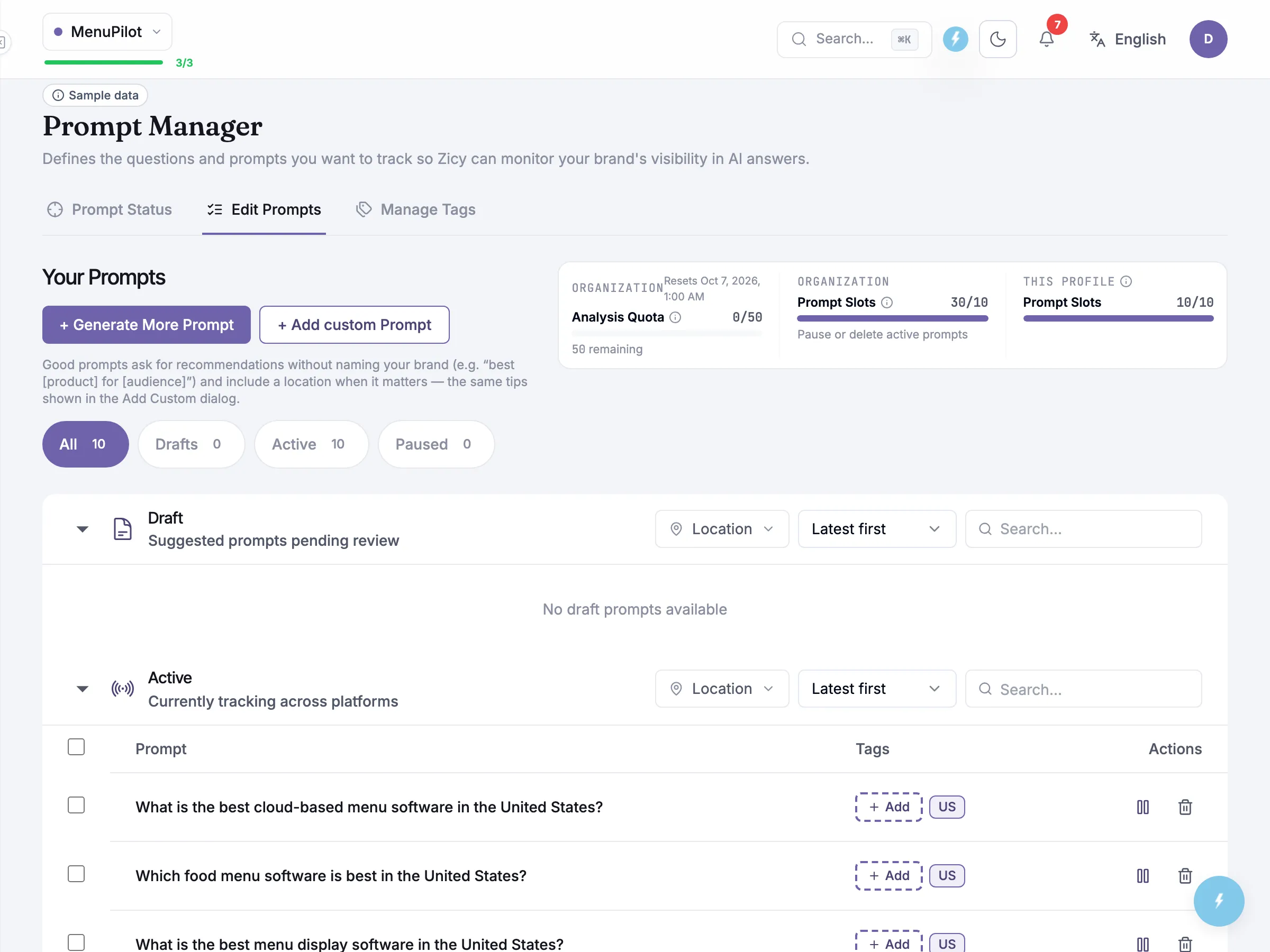
- Prompt ManagerChoose and own the exact questions AI is judged on; build and tag a prompt set across segments, topics and languages, run across all five engines. Read the module guide →
- AI VisibilityThe core scoreboard: brand mention coverage, citation rate, AI share of voice and average ranking, per engine, over time, plus a sentiment score out of 100. Read the module guide →
- Competitive AI PerformanceYour standing against named competitors, side by side, on coverage, ranking, citations, share of voice and sentiment. Read the module guide →
- Brand IntelligenceHow ChatGPT, Gemini, Google AI Overviews and Google AI Mode describe you, fact-checked: the AI Reality Score, the gaps you confirm, and a prioritised action plan. Perplexity is covered by prompt tracking. Read the module guide →
- Competitor Sentiment ProfilesHow AI frames each rival, with a sentiment score out of 100 and the words it uses most. Read the module guide →
- Key Topics AnalysisWhere you lead the answer, where you are in a fight, and where you are invisible, by topic. Read the module guide →
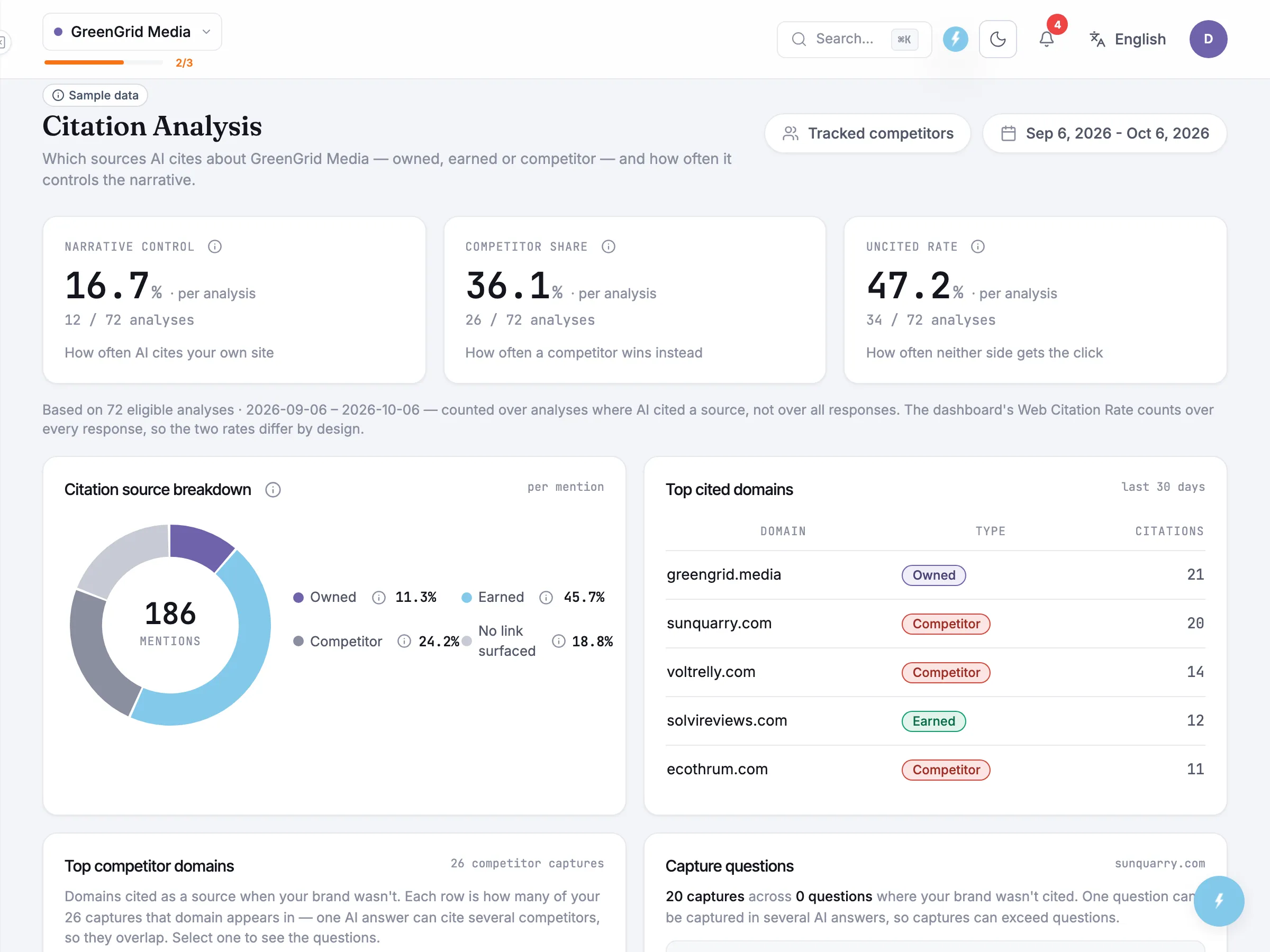
- Citation AnalysisWhich sources AI cites about you, owned vs. earned vs. competitor vs. uncited, with narrative control and competitor share, down to the URL. Read the module guide →
- Site AuditTechnical AI-readiness: llms.txt, AI-bot access, schema and page health. Read the module guide →
- Entity AuditReads your own site the way an AI engine does and reports what stops it seeing one clear company. Findings are ranked Blocking, High or Medium, and each fix is markup you publish. Read the module guide →
- Internal LinkingThe links to add between your own pages, inside the page copy, read from your latest Entity Audit. Pages that nothing links to are marked, because AI tends to read them on their own. Read the module guide →
- GBP AuditNine checks on your connected Google Business Profile and the website it links to, compared with up to four competitors you track. Each finding comes with a fix you make yourself, in Google or on your website. Read the module guide →
- Visibility GapsThe prioritised list of what to fix and what to publish, ranked by impact. Read the module guide →
- GBP OptimizerA new business description, within Google's 750-character limit, and a category suggestion, written from your GBP Audit findings. You paste them into Google. Read the module guide →
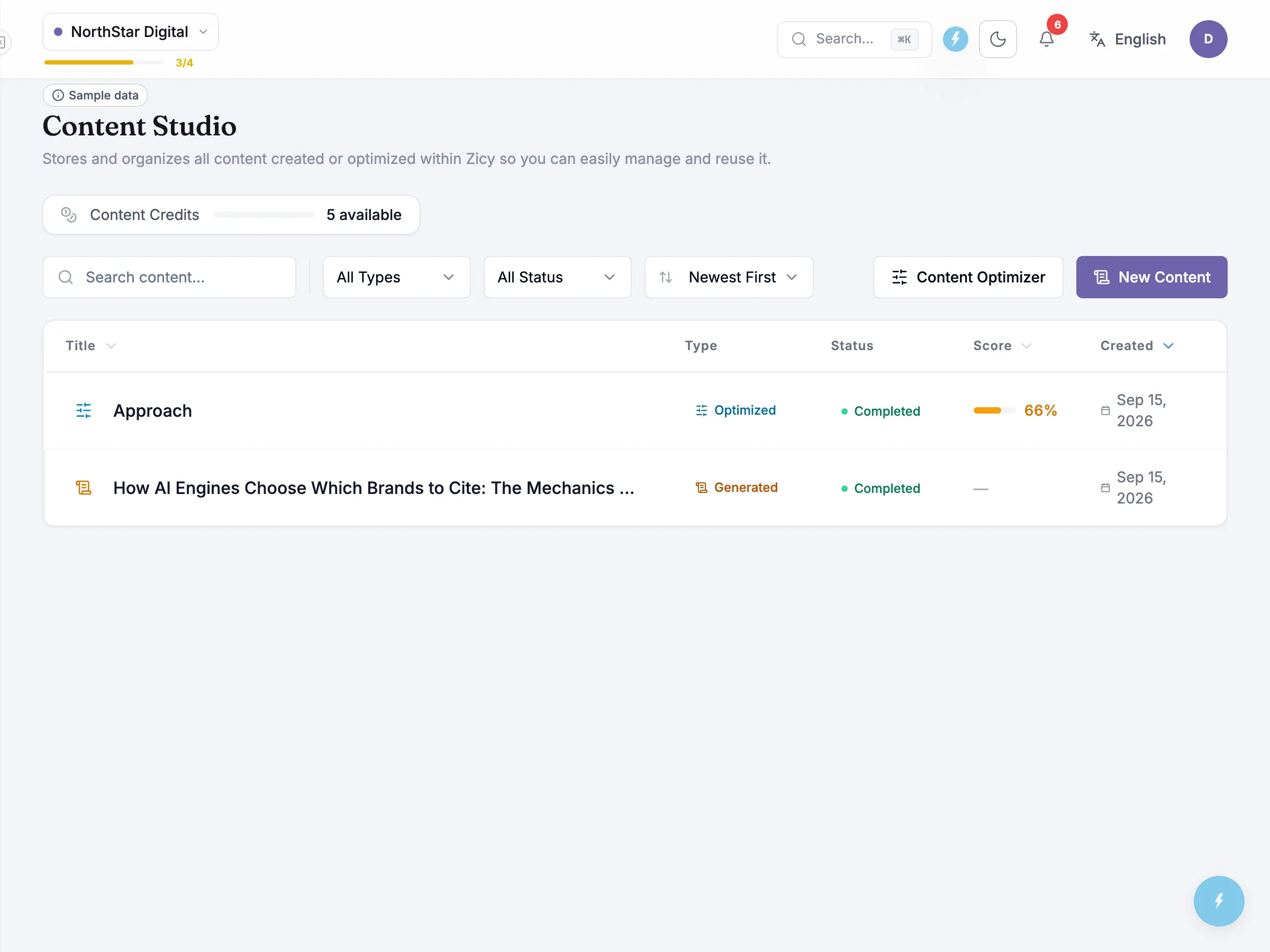
- Content StudioOne library for everything Content Generator writes and Content Optimizer scores. Read the module guide →
- Content GeneratorTurns a topic into a finished article, as one instant draft or step by step with your approval at each stage. Read the module guide →
- Content OptimizerScores a page you already have and rewrites the sections that will lift the score. Every rewrite waits for your review. Read the module guide →
- Schema GeneratorReads one page, works out what structured data is missing, and writes the JSON-LD to add. Read the module guide →
- LLMs GeneratorBuilds your llms.txt, a plain-text summary of your business and key pages for AI systems to read. Read the module guide →
- Pages SummaryEvery page on record for your site, with tools to find overlapping pages and pages worth linking to. Read the module guide →
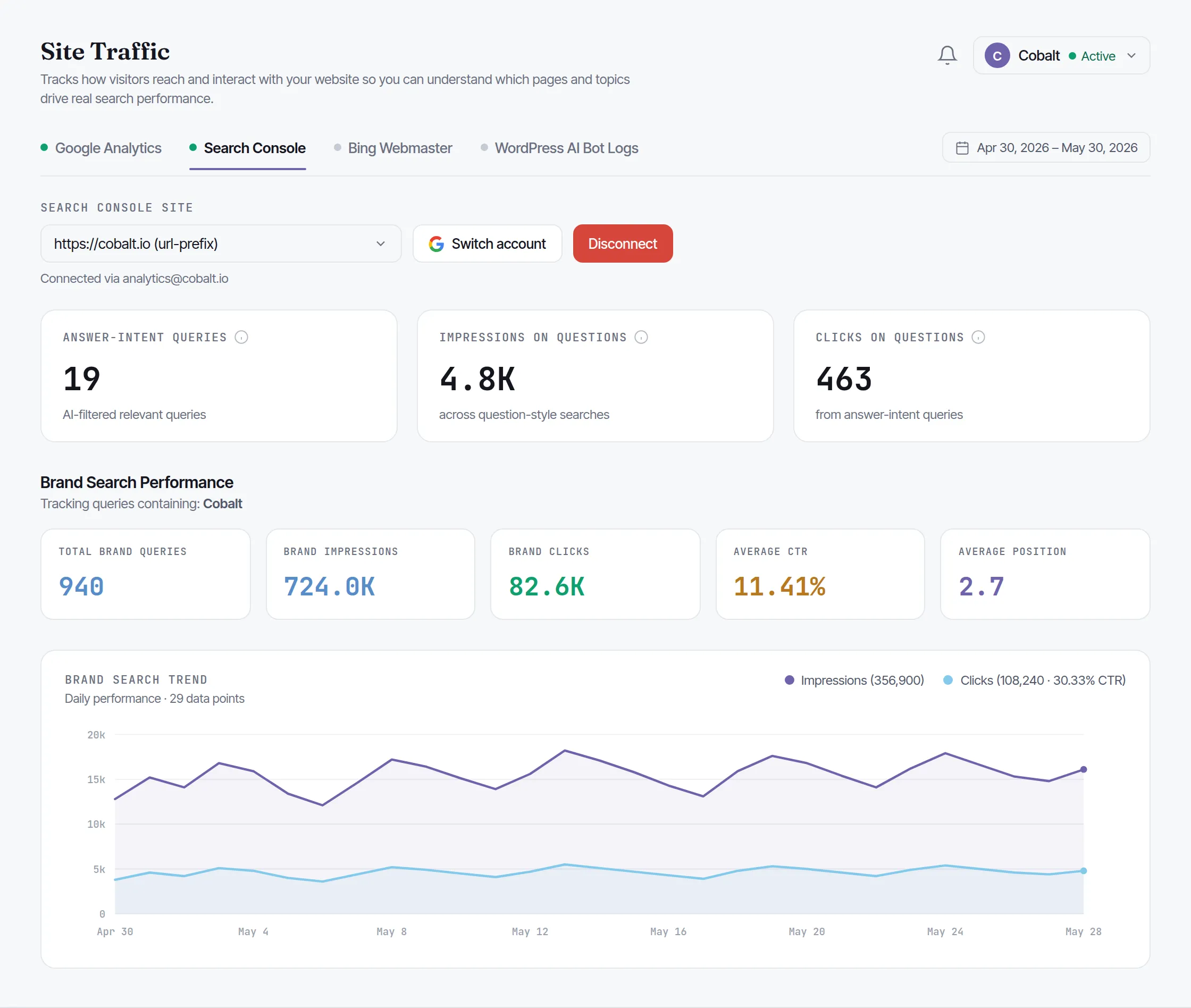
- Site TrafficAI-referred sessions and downstream engagement from GA4 and Search Console, connected to the visibility work: the line from AI visibility to demand. Read the module guide →
- Impact TrackerPut each change you ship on the same timeline as your AI visibility metrics. A table compares the week before each change with the latest week, and labels the result as change that coincided, not proven cause. Read the module guide →
In Diagnose, Brand Intelligence surfaces the AI Reality Score. See how the AI Reality Score is calculated → Two modules have their own pages: Entity Audit and Internal Linking → Impact Tracker →
Proof it brought customers, not just mentions.
Does winning the AI answer move demand? Zicy connects AI-referred sessions, answer-intent queries and branded-search behaviour from GA4 and Search Console to the visibility work, so AI visibility stops being a vanity metric. The result is a line that’s defensible in a budget review.
- AI-referred sessions, tied back to the visibility work.
- Answer-intent queries and branded-search behaviour, from GA4 and Search Console.
- The link between winning the answer and movement in demand, defensible in a budget review.
Competitors measure. Zicy proves.
The truth layer isn’t another metric. It’s the fact-check. Zicy flags where AI is wrong about you, not just whether you’re mentioned.
Truth, not just mentions.
The AI Reality Score catches hallucinations and outdated facts before buyers see them.
Every market, every language.
Coverage across the five engines in the languages your customers actually use, wherever they are. Built on Penang-rooted regional strength.
Act inside the tool.
Remediation and content tooling built to current best practice, no hand-off gap.
Change to consequence.
Impact Tracker shows what moved after each change you shipped, dated, and says plainly that it is change that coincided, not proven cause.
We win AI answers the same way we help you win them, by being genuinely easier to find, verify and trust.
Built for the people who own the answer.
See what AI tells your customers, and fix it, without a specialist.
For small businesses → For brandsSee whether AI gets your brand right, and fix what is wrong.
For brands → For PR & communicationsProve earned media moved the answer, not just the clip count.
For PR → For marketing & creative agenciesRun AI visibility as a white-label service line.
For agencies → For publishersSee whether AI attributes your work, or strips the credit.
For publishers →Platform questions.
How many AI engines does Zicy track?
Zicy tracks five engines, ChatGPT, Gemini, Perplexity, Google AI Overviews and Google AI Mode, on every plan. Every tracked prompt runs across each engine.
What is the difference between the loop and the modules?
The loop (measure, diagnose, act, prove) is the workflow; the modules are the tools that deliver each stage. You move around one loop using the modules below.
Does Zicy change my site, or only report on it?
It reports and gives you the fixes, but you publish them. The Take Action tools write schema, llms.txt, content and Google Business Profile suggestions, and Entity Audit and Internal Linking tell you which markup and links to add. Nothing changes on your site or your listing until you publish it.
How often does Zicy update?
Zicy tracks daily on every tier. Answer engines evolve gradually rather than by the hour, but daily tracking means you see meaningful shifts as soon as they happen, not a week after.
Can agencies white-label the platform?
Yes, through a custom agency arrangement, usually alongside an Enterprise or Scale plan. Our team sets up your logo, app name, accent colour and own domain on the dashboard. Agencies can also run many client profiles from one login. See the agencies solution page.
See your brand the way AI describes it.
All five engines, no commitment. Start a 7-day free trial.
