Sell advertising as measurable AI-visibility uplift, not just impressions.
Publishers sell media to brands. Zicy lets you sell it as something an advertiser can’t get from a rate card alone: proof that a campaign with you lifted their branded search and their visibility across ChatGPT, Gemini, Perplexity, Google AI Overviews and Google AI Mode. And it shows whether AI credits your own journalism, too.
At a glance
- Zicy shows publishers which of their pages AI answer engines cite, and for which topics and queries.
- It tracks citations at the URL level across ChatGPT, Gemini, Perplexity, Google AI Overviews, and Google AI Mode.
- Publishers can see where they are already the cited source and where high-value topics are still open.
Two things changed for your business at once.
Advertisers want outcomes beyond impressions, and AI answers increasingly decide which brands buyers consider. That makes AI visibility a thing you can now sell, and prove, on top of the inventory you already have.
The chain, stated plainly.
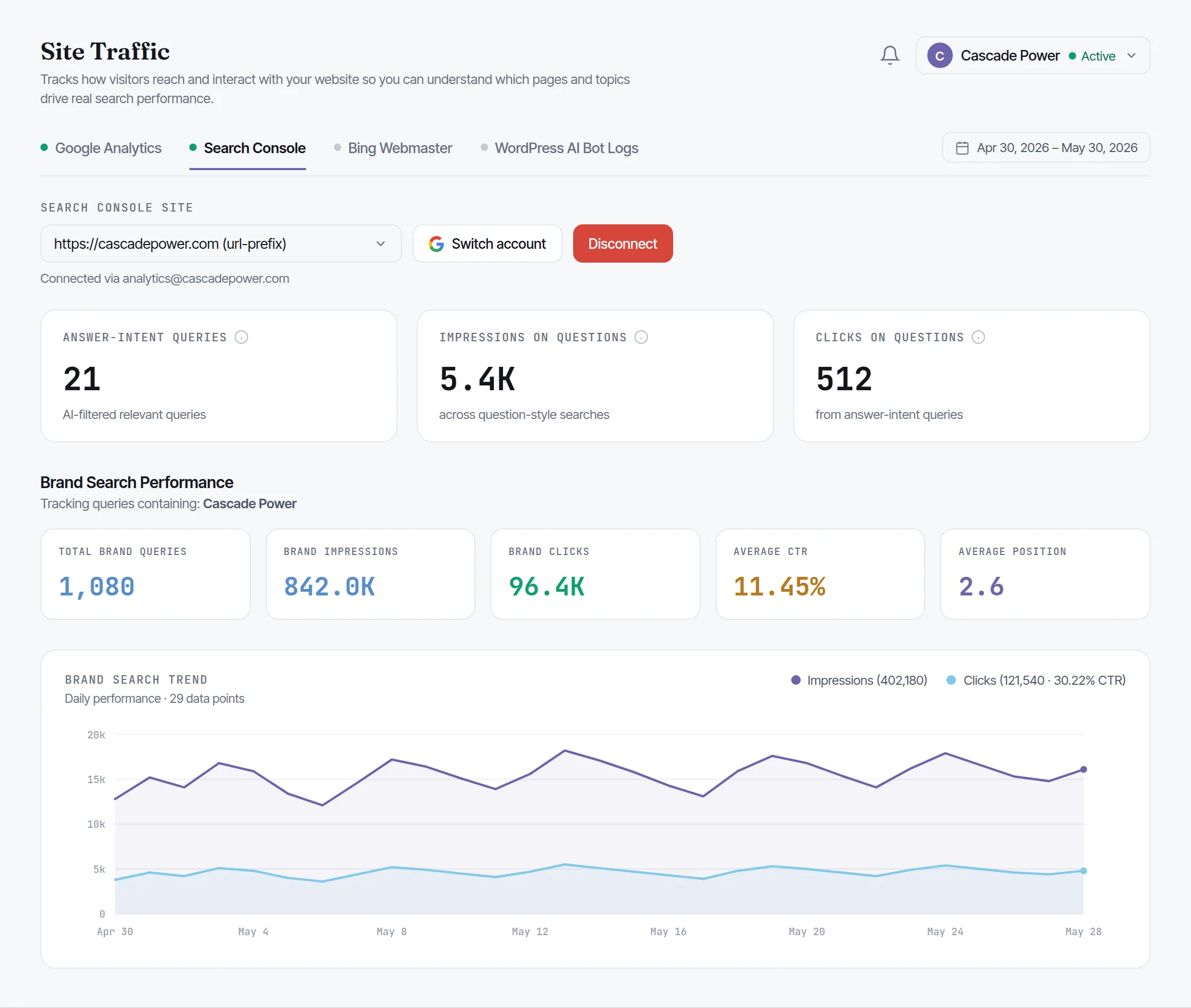
The advertising you sell builds an advertiser’s brand demand, and that shows up first as branded search. Advertising share of voice is a primary driver of share of search (Binet & Field / IPA, 2020), confirmed by controlled lift studies that measure incremental branded search from ad exposure (Google Search Lift).
Here is the part that matters for AI: the engines don’t read the ad. They read the behavioural signals it creates. Branded search correlates with AI visibility at roughly 0.33–0.39 (Growth Memo, Kevin Indig, 2025), and web mentions are the single strongest predictor at about 0.66, roughly three times backlinks (Digital Bloom, 2026). Display advertising has been shown to influence generative-search citations through exactly these signals rather than the ad itself (Brafton, 2026).
So a campaign with you is not just impressions; it moves the signals AI weights when it names brands. And your editorial is the stronger lever than display, because it creates the web mentions AI weights most.
This is a measured correlation, not a guaranteed citation, and that is exactly why it is defensible.
Bring the proof to the rate-card conversation.
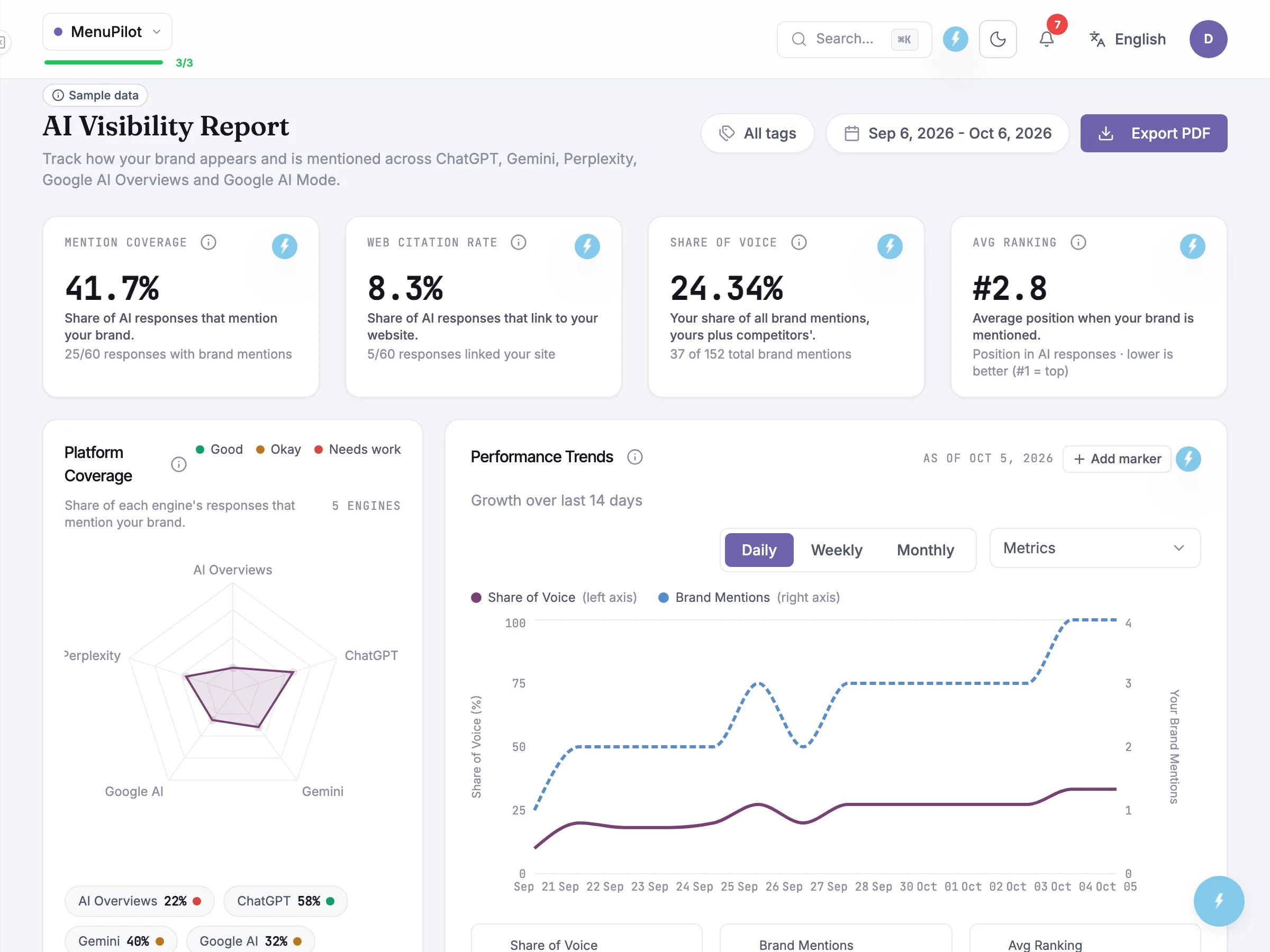
Zicy tracks any advertiser’s AI visibility across all five engines and their share of search from public search data (no access to the advertiser’s analytics required), so your sales team can show a before-and-after around a campaign window. You sell the inventory; Zicy gives you the evidence that it moved the advertiser’s position in the answer.
- A pre-campaign baseline of the advertiser's AI Share of Voice and branded search.
- Continuous tracking across the campaign window. Impact Tracker marks the campaign on the chart and compares the week before with the latest week.
- A post-campaign read your sales team can put in a renewal conversation.
And know whether AI credits your work.
The same platform shows whether AI attributes your journalism, paraphrases it without credit, or ignores it, across five engines, down to the URL. A documented uncited rate and source-level attribution give your commercial team an evidence base for AI-licensing conversations, at a moment when publishers from the Associated Press to USA Today are signing AI content deals while others litigate over uncited use (Digiday; Press Gazette, 2025–26).
The modules behind both motions.
AI Visibility
An advertiser's mention coverage, citation rate, AI Share of Voice and average ranking across five engines, baselined and tracked across a campaign.
Competitive AI Performance
The advertiser's standing vs rivals, the before-and-after your sales team shows.
Site Traffic / share of search
Branded-search movement from public search data, the first link in the chain made visible.
Impact Tracker
Mark the campaign window on the advertiser's metrics. The change table compares the week before with the latest week and labels the result as change that coincided, not proven cause, so your sales team can show it without overclaiming.
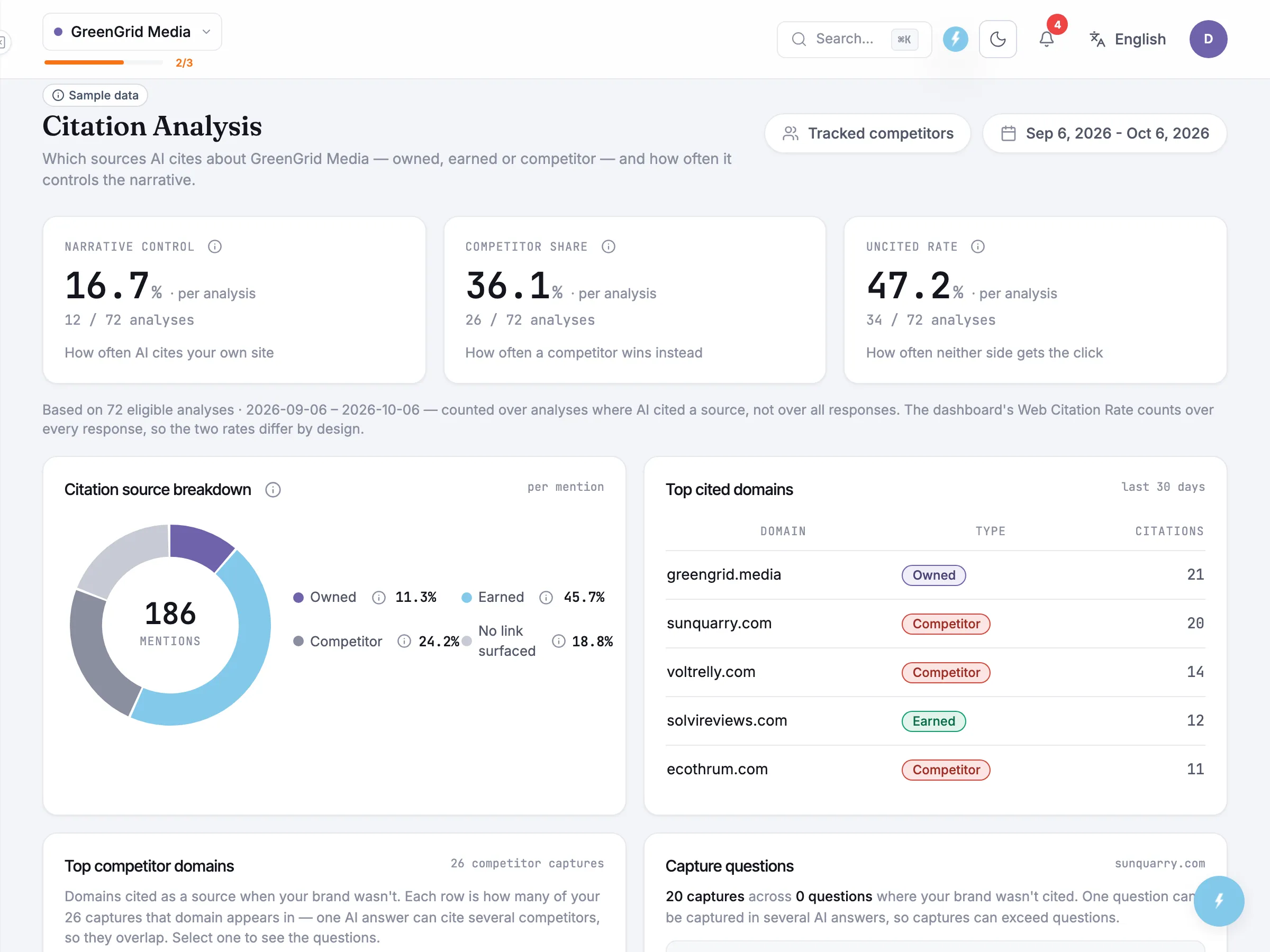
Citation Analysis
Attribution, paraphrase-without-credit and the uncited rate, down to domain and URL.
Site Audit
llms.txt, bot access, schema and page health; scales to large archives via audit-boost add-ons.
Key Topics Analysis
Leaders, Battlegrounds and Blind Spots against competing outlets.
Internal Linking
Articles that nothing links to are marked in amber. AI tends to read a page like that on its own, so an answer about your beat can skip it. The list shows the links to add inside your copy.
Entity Audit
Whether an AI engine reading your pages can see your title, sections and authors as one clear set of entities. Where it cannot, you get the markup to publish.
New to Zicy? The help centre has a step-by-step guide for publishers.
Questions publishers ask.
What does AI citation mean for a publisher?
AI citation is when an engine attributes and links your journalism as a source in its answer, rather than paraphrasing it without credit or ignoring it. As referral clicks fall, citation is becoming the unit of value publishers measure, defend and license.
What is an uncited rate?
An uncited rate is the share of cases where an AI engine draws on your reporting without attributing or linking it. Zicy measures it down to the individual URL across five engines, giving your commercial team an evidence base for licensing conversations rather than an anecdote.
We sell advertising, how does Zicy help us sell more of it?
It lets you sell advertising as measurable AI-visibility uplift, not just impressions. Zicy tracks an advertiser's visibility across all five engines and their branded-search movement from public search data, so your sales team can show the lift a campaign produced, the demand signals independent research ties to AI citation (Growth Memo, Kevin Indig, 2025).
Are we promising advertisers that paying us gets them cited by AI?
No, and that distinction is the whole point. AI engines don't read the ad. They read the branded search and web mentions it creates (Brafton, 2026), and those signals are stronger predictors of AI citation than backlinks (Growth Memo, Kevin Indig, 2025; Digital Bloom, 2026); Zicy measures the movement. It is a measured correlation, not a guaranteed citation, and it stays on the endorsed side of Google's May 2026 spam-policy guidance, paid placements carry rel="sponsored" or rel="nofollow", sponsored editorial is disclosed, and no paid link passes ranking signal.
Why is editorial a stronger sell than display for this?
Because editorial creates the signal AI weights most. Web mentions are the single strongest predictor of AI citation, at about 0.66, roughly three times backlinks (Digital Bloom, 2026), and on a cited title genuine editorial can become a source in its own right, while display advertising mainly lifts the weaker branded-search signal (Brafton, 2026). You can price and position the two tiers accordingly.
Is AI actually using our journalism, and can we put a number on it?
Yes, and that's precisely what Citation Analysis does. It shows whether AI attributes your work, paraphrases it without credit, or ignores it entirely across five engines, down to the domain and URL, so you can track attribution the way you already track traffic.
Referral traffic is collapsing, why does attribution matter if the clicks are gone?
Because attribution is the new referral. News leaders expect to lose significant search-referral traffic within three years (Reuters Institute, Journalism, Media & Technology Trends and Predictions 2026), and the click-through to an AI Overview's own citation links sits around 1% when present (Pew Research, 2025); the publishers who measure attribution now are the ones positioned to license and defend it later.
How do we measure whether AI is citing our competitors instead of us?
Competitive AI Performance shows, query by query, which outlets AI credits across all five engines, so you see where a rival title is taking the citation and where you still hold it, rather than guessing at your standing.
What can we actually do about uncited use, isn't it out of our hands?
Part of it is squarely in your hands, being machine-readable. The Site Audit checks whether AI crawlers can read and attribute you (llms.txt, bot access, schema, page health), so credit isn't lost to a technical gap, and the uncited rate gives you the evidence base for everything that isn't technical.
Where do we still own the answer, and where have we lost it?
Key Topics Analysis shows it directly, Leaders, Battlegrounds and Blind Spots, across the topics that define your title, turning "AI is taking our work" into a commissioning and attribution plan.
Can this support our AI-licensing negotiations?
Yes. This is one of its strongest uses. A documented uncited rate and source-level attribution data give your commercial team an evidence base for licensing conversations and the boardroom, rather than an anecdote, at a moment when publishers from the Associated Press to USA Today are signing AI content deals while others litigate over uncited use (Digiday; Press Gazette, 2025–26).
Should we block AI crawlers or feed them?
That's a real strategic choice, and Zicy lets you make it with data instead of a guess. It shows the trade-off between being cited and attributed versus scraped without credit, by engine and by topic, so the decision is measured.
Is this built for marketers, or for us?
It reads the same signals, but the lens for you is attribution, topic authority and commercial opportunity, not lead generation, Citation Analysis, Key Topics and the Site Audit are framed around who's using your work, where, and with what credit, alongside the media-sales tracking above.
How do we handle a large archive without a huge project?
The Site Audit inventories and checks the archive, and audit-boost add-ons scale to large sites, so you can assess attribution and machine-readability across thousands of pages without a rebuild. Pages Summary lists the pages already on record and finds overlapping ones, and Internal Linking shows which archive pages nothing links to.
General questions about Zicy and AI visibility.
What is AI visibility?
AI visibility is how often, how accurately, and how prominently a name appears in the answers AI engines give when people ask about its category, across ChatGPT, Gemini, Perplexity, Google AI Overviews and Google AI Mode. It is distinct from search rankings: something can rank on Google's first page and still be absent from the AI answer.
What is AEO or GEO?
AEO (answer engine optimisation) and GEO (generative engine optimisation) are the practices of making a name accurately findable and citable in AI-generated answers, rather than ranked in a list of links. They address AI engines, ChatGPT, Gemini, Perplexity, Google AI Overviews and Google AI Mode, where SEO addresses traditional search results.
How is AI visibility different from SEO?
SEO optimises where pages rank in a list of links; AI visibility determines whether a name is mentioned and cited in a synthesised answer. They run on different signals, only 12% of AI-cited links also rank in Google's top 10 (Ahrefs, 15,000 prompts, 2025), so a strong SEO position does not guarantee a place in the answer.
What is AI Share of Voice?
AI Share of Voice is the percentage of AI answers in a category that mention a given name, measured against a tracked competitor set. It is the headline metric Zicy reports, because it reflects the answers people act on rather than the rankings or impressions older metrics counted.
Which AI engines does Zicy track?
Zicy tracks five engines: ChatGPT, Gemini, Perplexity, Google AI Overviews and Google AI Mode. Each weights sources differently, so coverage across all five, rather than any single one, is what gives a defensible picture.
Does Zicy check my Google Business Profile?
Yes. Once you connect your listing with a Google sign-in, GBP Audit runs nine checks. Seven read the listing: business hours, website link, phone number, business description, review volume, listed category, and whether your name, address and phone match your website, or what is on file. Two look at your website: whether the listing's link points to this location's own page, and whether your site has a page for this location. It also compares your listing with up to four of the competitors you already track. GBP Optimizer can then write a new business description and a category suggestion for you to paste into business.google.com. Zicy never edits your listing and does not reply to reviews.
How does Zicy know what the AI said, does it scrape, and is it reliable week to week?
Measurement uses legitimate API access where available and respects platform terms of service, no machine-generated rank-checking traffic. Tracking is daily on every plan, so you see meaningful shifts as soon as they happen, not a week later. The weekly and monthly views roll those daily results into a smoother trend.
How quickly does AI visibility change once you act?
AI visibility shifts gradually rather than overnight, because the engines rebuild entity understanding and retrieval over time rather than on a fixed schedule. Zicy tracks daily so you can watch movement against a baseline as fixes, content and earned coverage take effect, rather than waiting for a single before-and-after snapshot.
Could using this get us penalised by Google?
No, the approach is the opposite of manipulation. Zicy's tooling is built to current best practice and aligned with Google's May 2026 spam-policy update covering AI Overviews and AI Mode; the work is to make genuine expertise easier for AI to find, verify and trust, not to game it.
What does it cost, and what are we locked into?
Plans run from $79 a month (Starter) to $449 (Scale), with custom Enterprise; Starter and Growth include a 7-day trial, the annual plan gives thirteen months for twelve. The platform is self-serve with no lock-in.
Why a tool built in Penang rather than a US platform?
Because coverage in your markets and languages is the starting point here, not an afterthought. APAC-native coverage across all five engines and the languages your buyers actually use is built in, and Zicy operates under Malaysia Digital status.
Sell the answer, and prove you moved it.
Baseline an advertiser, or see whether AI credits your journalism, across all five engines.
