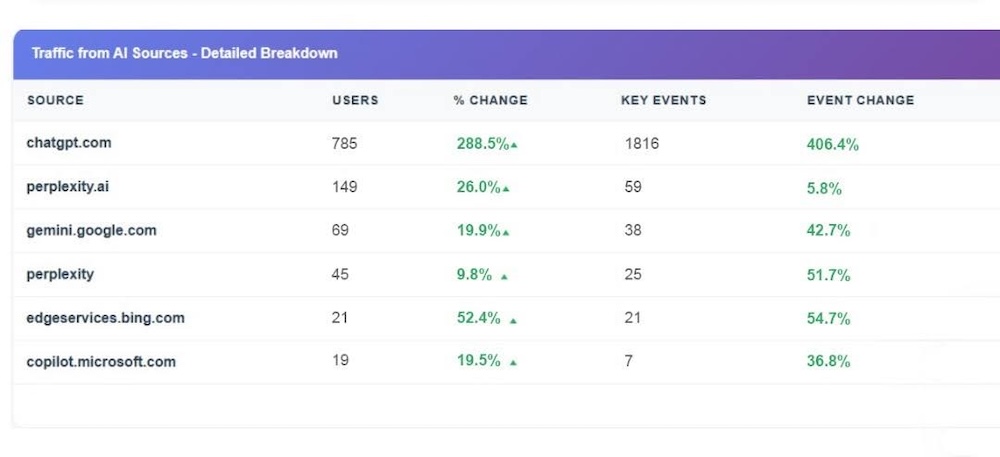
As AI-driven platforms like ChatGPT, Gemini, Perplexity, and Copilot increasingly influence discovery, traditional analytics tools fall short.
Google Analytics can tell you who visited your site — but not who read about your brand inside an AI-generated answer.
To measure modern visibility, businesses need analytics tools built for AEO (Answer Engine Optimization) and GEO (Generative Engine Optimization) — tools that track citations, mentions, and conversational presence across AI ecosystems.

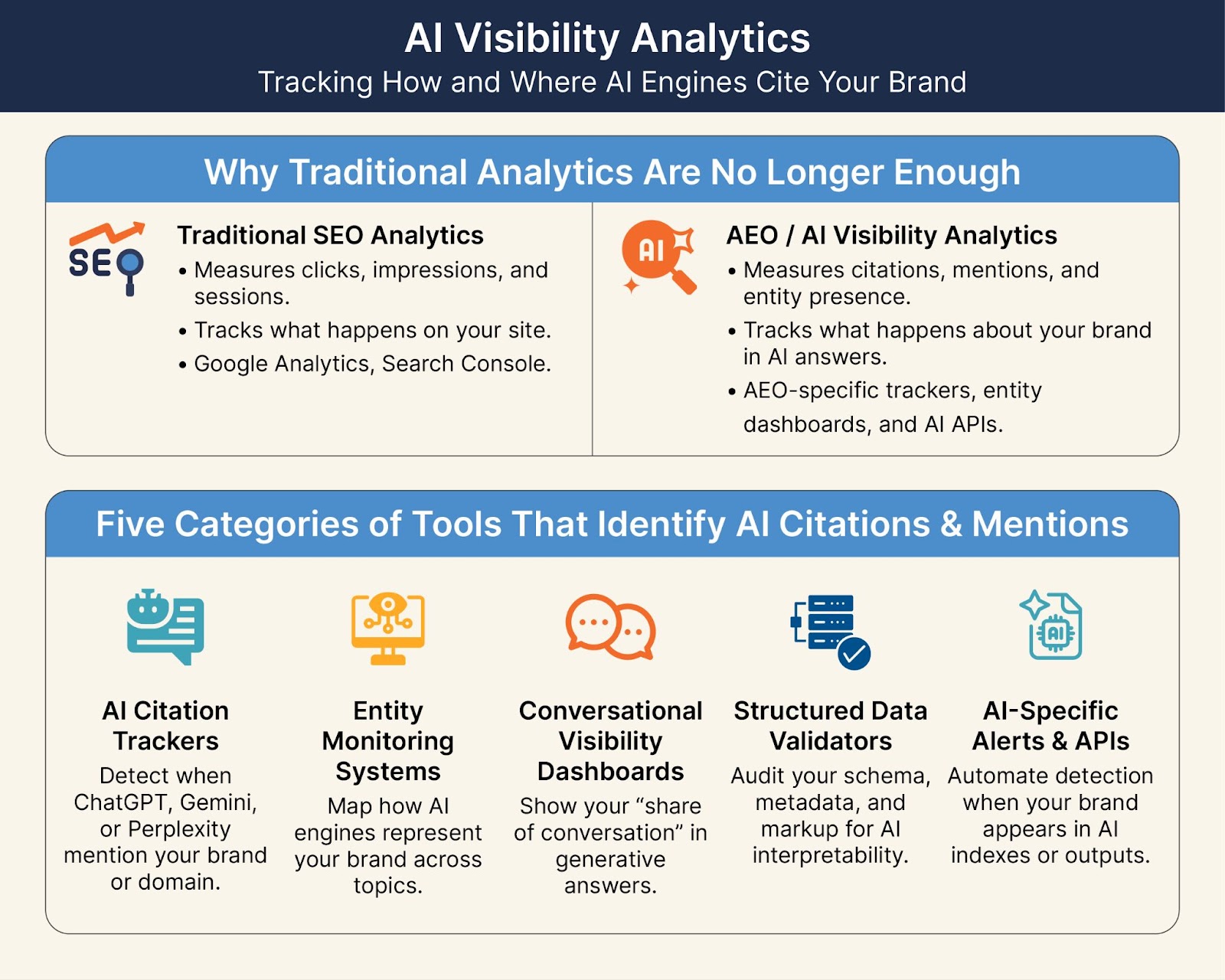
Why traditional analytics no longer give a full picture?
In the past, SEO analytics revolved around impressions, clicks, and conversions. But as AI platforms generate “zero-click” answers, brand influence now extends beyond visible traffic.
Here’s what traditional tools can’t yet capture:
- When your content is cited or summarized in AI answers.
- How often your brand appears as a source across conversational engines.
- Which topics or prompts generate your most frequent mentions.
That’s why new visibility metrics — such as citations, brand mentions, and AI share of voice — are essential for understanding performance.
Also read: What Is the ROI of Being Cited by AI Engines Compared to Ranking on Google?
What types of tools can identify AI citations and mentions?
While this space is still emerging, the key categories include:
- AI Citation Trackers: Platforms designed to crawl ChatGPT, Gemini, and Perplexity outputs for brand or domain mentions. They reveal which prompts or contexts trigger your citations and whether they appear as direct links or plain mentions.
- Entity Monitoring Systems: Tools that map how AI engines represent your brand — tracking name accuracy, service descriptions, and topic associations. These help assess how well your entity optimization efforts are performing.
- Conversational Visibility Dashboards: Analytics layers that monitor your share of conversation — how often your brand appears in generative summaries versus competitors.
- Structured Data Validators: Tools that check your schema, metadata, and markup health — ensuring AI can interpret your site correctly. Read: Which Schemas and Entity Markups Are Most Critical for Brands?
- AI-Specific Alerts and APIs: Custom monitoring scripts or APIs that detect when your domain is surfaced in AI models or public answer indexes (Perplexity, You.com, etc.).
These tools give marketers and executives visibility into AI-era influence, not just web traffic.
How can businesses integrate AI visibility tracking into reporting?
To make AI visibility measurable and comparable, integrate these metrics into your marketing intelligence dashboards:
- Add AI citation counts alongside organic traffic.
- Compare the share of conversation vs. the keyword share to demonstrate the search paradigm shift.
- Correlate AI mention growth with lead and conversion data to quantify business impact.
- Visualize entity accuracy as part of your brand authority tracking.
This integrated approach connects generative visibility with familiar business KPIs — bridging the gap between new and traditional metrics.
Why tracking AI references is now a competitive necessity?
If AI engines are already shaping your category narratives, tracking who they cite means tracking who owns influence. Brands that monitor AI citations early can identify gaps, fix misrepresentations, and seize untapped visibility before competitors do.
In essence, AEO analytics isn’t just measurement — it’s strategic foresight.
Read: How to Benchmark Your AEO Readiness Against Competitors?
The key takeaway
Traditional analytics measure visitors. AEO analytics measure visibility within conversations that shape buyer intent. If you’re not tracking how AI engines reference your content, you’re missing where the real decisions are now being made.