What if your future customers never Google you, yet still find you?
That’s the new reality of discovery. Platforms like ChatGPT, Gemini, and Perplexity are increasingly where people ask their most urgent questions, and where buying decisions quietly begin.
For our client, the challenge was clear: could they harness these AI-driven moments to generate real users and measurable conversions?
The answer: absolutely.
By aligning content, structure, and tracking for AI-first discoverability, this brand turned experimental AI traffic into a consistent growth engine.
The results..
Between January – July 2025, the client saw clear growth across AI platforms:
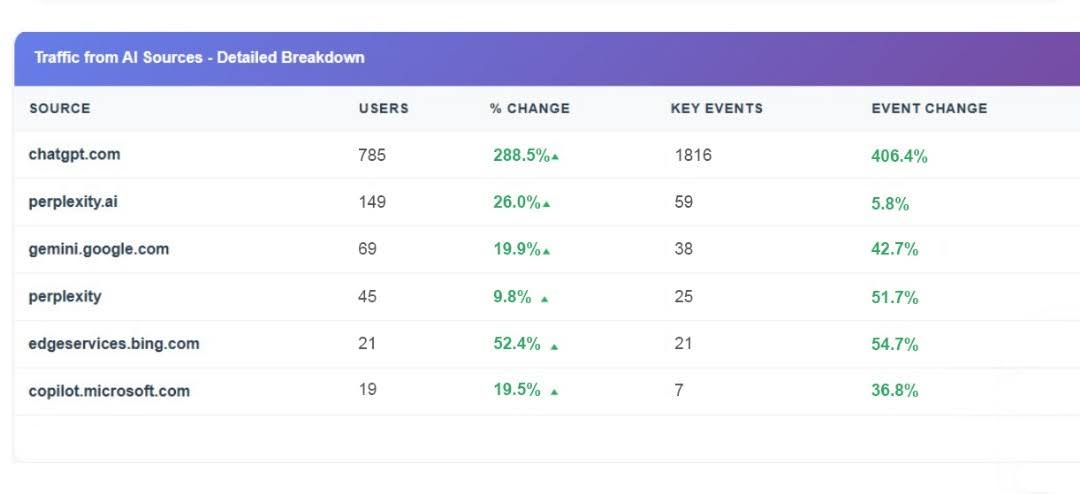
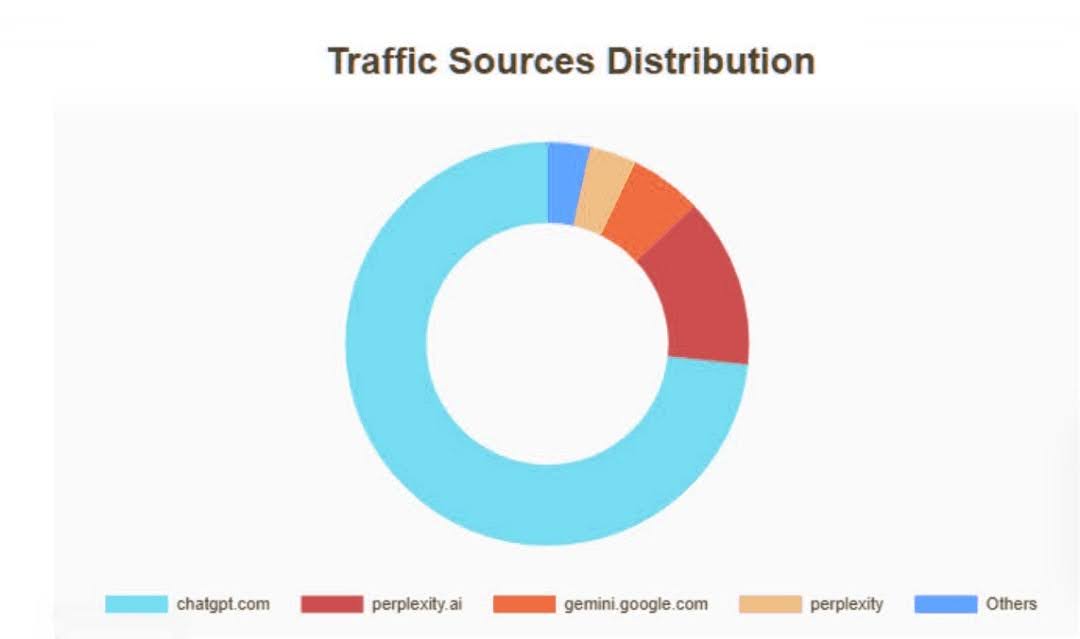
- 785 users from ChatGPT, marking a 288.5% increase
- 149 users from Perplexity.ai, with 26.0% growth
- 69 users from Gemini (Google), showing 19.9% growth
- 45 users from Perplexity, up 9.8%
- 21 users from Edge (Bing AI), delivering a 52.4% increase
- 19 users from Copilot (Microsoft), with 19.5% growth
And the most important metric, conversion-driving activity:
- 1,966 tracked key events (from ChatGPT, Perplexity, Gemini, Perpplexity.ai, Edge, Copilot), with a 406.4% jump in key events from ChatGPT alone!
- Significant event growth across platforms, including:
- Gemini: +42.7%
- Perplexity: +51.7%
- Edge: +54.7%
- Copilot: +36.8%
How we did it…
- Rethinking Research
Instead of starting with keywords, the team:
- Pinpointed customer pain points and USP-led messaging.
- Built topic clusters around high-intent themes.
- Analysed competitor mentions inside AI responses, not just SERPs.
- Focused efforts on bottom-funnel content to drive leads, not vanity clicks.
- Making Content AI-Readable
To increase the chance of being cited and surfaced:
- Added concise takeaway sections for snippet-style answers.
- Structured content in an “answer-first” inverted pyramid style.
- Embedded FAQ blocks by addressing common questions.
- Technical SEO With AI in Mind
Optimisations ensured AI models could easily interpret content:
- Schema markup rolled out across all product/service pages.
- Fixed header hierarchies (H1–H6) for logical flow.
- Image alt text improved for clarity.
- Robots.txt updated to give AI crawlers full access to priority pages.
- Measuring AI Traffic Directly
To avoid guesswork, the brand established:
- Tracking systems to isolate AI-originating traffic.
- Behavioural analysis to map AI-driven conversion journeys.
- A feedback cycle where insights shaped new content creation.
The takeaway
AI platforms aren’t just a novelty. They’re a growing part of the customer journey.
By adapting both content and technical infrastructure to this new search environment, the brand positioned itself not just to be found, but to be trusted and chosen.