Key Takeaways
- AI is shifting eCommerce from search to guided decision-making.
- Product visibility depends on structured, complete, and comparable data.
- Brand authority acts as a multiplier for recommendation likelihood.
- AI recommendations favour use-case and scenario-based queries.
- Decision-support content increases chances of being selected by AI.
- Competition is moving to AI-generated shortlists, not search rankings.
- Success depends on trust, clarity, and contextual product relevance.
Introduction
AI assistants are evolving from answering questions to suggesting solutions — including specific products, services, and brands.
When users ask “Which laptop is best for graphic design?” or “What’s the safest sunscreen for sensitive skin?”, engines like Microsoft Copilot, Google Gemini, and ChatGPT can surface curated product suggestions.
For businesses, that means the next wave of eCommerce visibility won’t come from ads or rankings, but from AI recommendations powered by structured, trusted data.
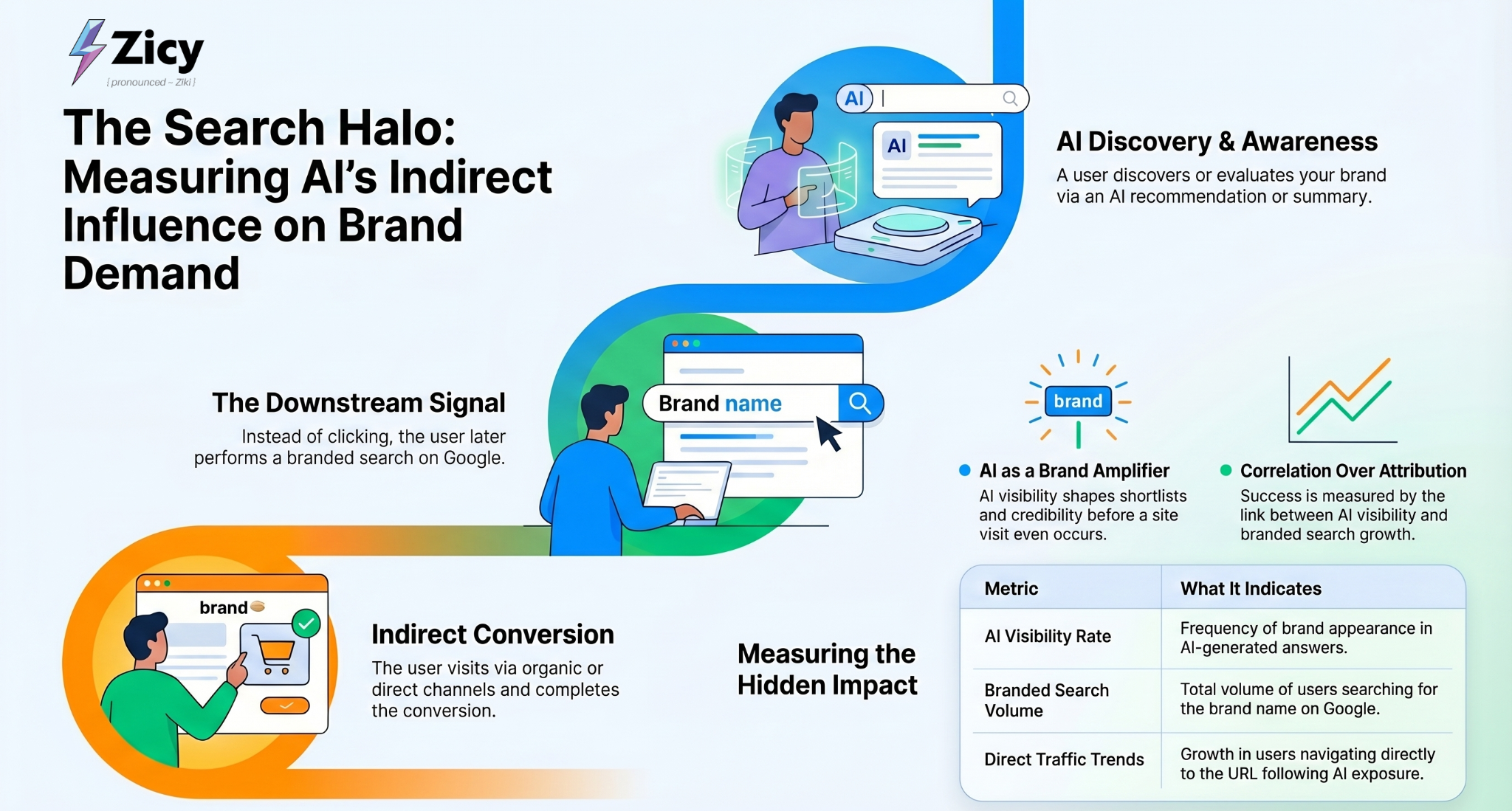
This marks a shift from search-driven discovery to guided decision-making, where AI systems act as intermediaries that filter options and present a shortlist, often reducing the number of brands a user evaluates.
How do AI engines choose which products to recommend?
AI engines don’t browse your website like humans — they synthesize from knowledge graphs, verified data, and product feeds.
Their recommendation logic depends on:
- Structured product data: Detailed specifications, schema markup, and accurate metadata (price, category, reviews).
- Brand authority: The reputation and consistency of your brand across the web.
- User context: The AI interprets the user’s query — intent, location, or preference — and matches it with high-confidence product data.
In practice, the more machine-readable and verifiable your product information is, the more likely it is to appear in AI-generated lists and suggestions.
AI systems also prioritise attribute completeness — products with clearly defined features (e.g., materials, compatibility, use cases) are easier to match with user intent and therefore more likely to be recommended.
Another key factor is comparability. Products that can be easily compared across standard attributes (price, performance, category) are more likely to appear in “best of” or “top options” lists generated by AI engines.
Also read: How to Prepare Your Website for Google AI Overviews (Step by Step)?

Why does brand authority matter as much as data accuracy?
Even when product data is available, AI engines prefer citing trusted brands.
Authority acts as a multiplier: two identical data entries can produce different outcomes if one brand is considered more reliable.
That reliability is signaled through:
- Mentions and citations across credible sites.
- Authoritative entity recognition within AI models.
- Reinforced reputation via news, Wikipedia, or external validation.
This is where AEO and GEO intersect with product visibility. You’re not just optimizing SKUs — you’re teaching AI to associate your brand with trust, relevance, and category leadership.
AI systems often apply a confidence threshold when recommending products. Brands with stronger authority signals are more likely to pass this threshold, especially for high-stakes or high-consideration queries.
Over time, repeated inclusion in recommendations builds a category association effect, where your brand becomes strongly linked to specific product types or use cases in AI-generated answers.
Learn: What Does It Mean to Become an Authoritative Entity for AI Engines?
Can brands influence AI recommendations ethically?
Yes — through transparent optimization, not manipulation. The brands that succeed treat AI as a distribution channel for verified expertise, not just product promotion.
Key strategies include:
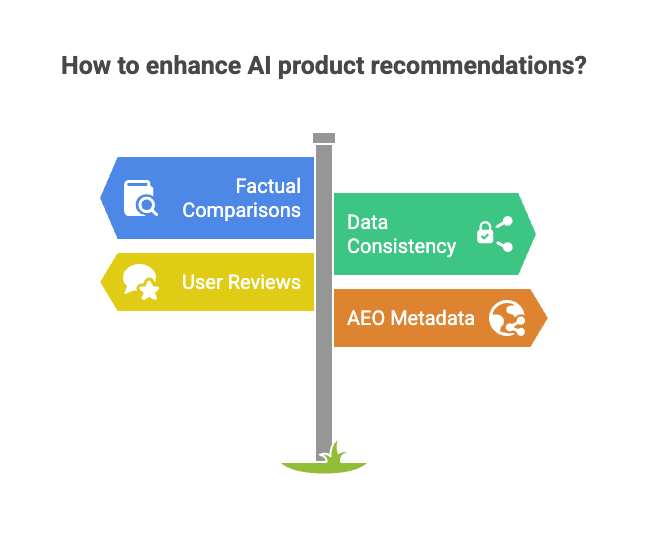
- Publishing neutral, factual product comparisons that position your brand as an educator, not just a seller.
- Maintaining consistency between website data, Google Merchant Center, and structured product markup.
- Ensuring real user reviews and quality ratings are indexed by AI engines.
- Using AEO-aligned metadata to connect your products to broader topics (“eco-friendly skincare,” “enterprise CRM,” etc.).
Brands should also optimise for use-case driven queries (e.g., “for beginners”, “for sensitive skin”, “for small businesses”), as AI engines frequently map user intent to specific scenarios rather than generic product categories.
Another effective approach is creating decision-support content layers for pages that explain how to choose, compare, or evaluate products, which AI systems often use as a basis for recommendations.
When done well, this approach helps AI engines organically recommend your products in response to user needs — the digital equivalent of word-of-mouth.
What’s the long-term opportunity for brands?
As AI assistants integrate shopping, Copilot and Gemini will act as personalized decision advisors.
That means fewer clicks, but stronger brand recall for those cited or recommended. In time, AI-driven recommendations could rival ad placements in influence — without the cost.
The brands that win will be those that blend data integrity, content clarity, and ethical transparency — because the AI marketplace rewards truth more than hype.
This shift may also redefine digital shelf space. Instead of competing for page positions, brands will compete for placement within AI-generated shortlists, where only a limited number of products are surfaced per query.
As personalisation improves, AI recommendations will increasingly reflect user-specific preferences, making it critical for brands to provide rich, contextual product data that can adapt to different user scenarios.
Also read: What Is the ROI of Being Cited by AI Engines Compared to Ranking on Google?
Conclusion
AI doesn’t sell products — it recommends trust.
Your goal isn’t just to be listed, but to be chosen — by both algorithms and the audiences they serve.
In this new model, product visibility is no longer just about presence. It’s about relevance, confidence, and contextual fit within AI-driven decisions.