Being mentioned in an AI-generated answer is the new form of digital authority.
When ChatGPT, Perplexity, or Google Gemini cite your brand, they are publicly validating you as a reliable source of truth. These citations drive awareness, credibility, and influence — even before a user clicks your website. But how exactly can you earn those mentions?
How do AI engines decide which brands to cite?
AI engines like ChatGPT and Perplexity don’t randomly select sources. They rely on data quality, factual clarity, and contextual authority.
In simpler terms, they cite what they can understand, verify, and trust.
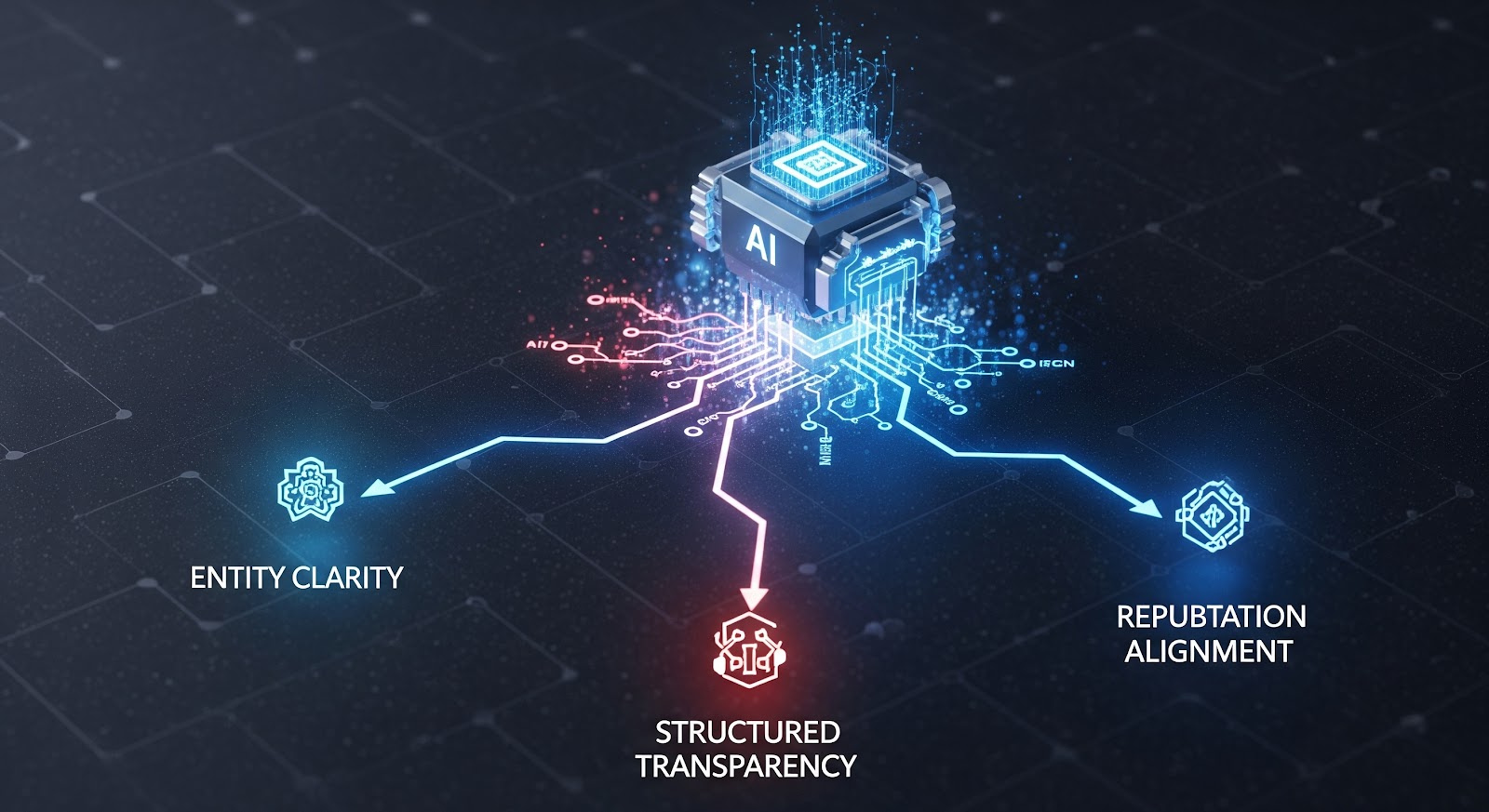
Their selection depends on three key signals:
- Entity clarity: Your brand, products, and experts must be clearly defined and consistently described across the web.
- Structured transparency: Use schema markup, author profiles, and source links to make your content readable by machines.
- Reputation alignment: AI systems weigh credibility based on reviews, backlinks, news coverage, and references from authoritative sites.
Read: What Does It Mean to Become an Authoritative Entity for AI Engines?
Essentially, AI engines function like professional editors — they prioritize sources that are clear, verifiable, and consistently credible.
What kind of content gets cited most often?
AI prefers content that directly answers questions. The more structured, factual, and contextually complete your text, the more “extractable” it becomes.
This includes:
- Concise explanations that answer a query in one paragraph.
- Well-formatted sections with subheadings and logical flow.
- Supported claims with cited sources or original data.
Blogs, FAQs, research reports, and product explainers with clear headings are ideal.
Learn: What Kind of Content Does AI Prefer to Cite — Blogs, FAQs, or Structured Data?
Unlike traditional SEO, keyword stuffing won’t help here. AI models ignore repetition and favor semantic relevance — the overall clarity and completeness of the idea you’re conveying.
What steps can brands take to start earning AI citations?
If you want ChatGPT or Perplexity to quote your site, start optimizing for machine comprehension and factual integrity.
- Create a transparent knowledge layer: Add schema markup, FAQ sections, and internal linking to your top content.
- Publish verifiable insights: Include original research, statistics, or case studies that AI engines can confidently cite.
- Ensure cross-platform consistency: Keep your brand name, tagline, and descriptions uniform across LinkedIn, Wikipedia, and company bios.
- Track and refine: Use AI-monitoring tools to identify which prompts already surface your brand and where new opportunities exist. Learn: How to Track AI Citations and Measure Their Impact on Leads and Sales?
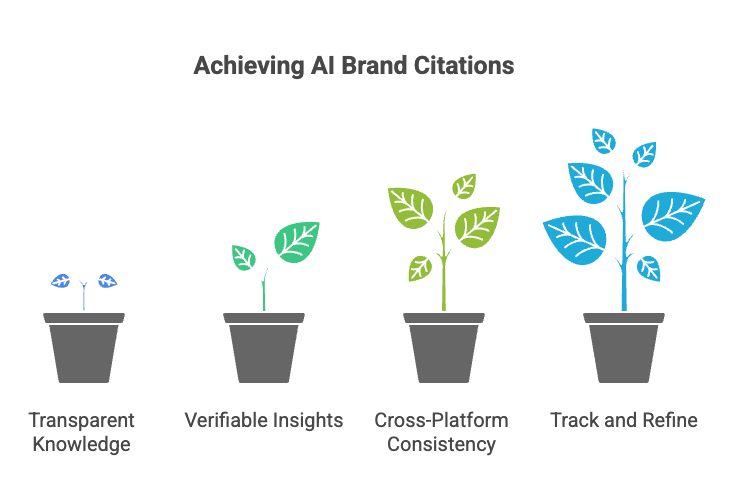
Each improvement sends a stronger signal to AI engines that your brand’s content is structured, reliable, and citation-ready.
Why should brands act now?
Every day, AI engines expand their data models, learning which sources to trust. Early movers are already shaping that trust network. If your competitors are being cited today, their advantage compounds with every AI model update.
Waiting means being absent from the data that powers tomorrow’s answers. Acting now means training the algorithms to know, quote, and trust you.
Also read: Should Your Marketing Team Start Investing in AEO/GEO Now or Wait?
The key takeaway
To be cited by ChatGPT or Perplexity, your brand must speak the language of machines: structured data, consistent facts, and credible expertise.
In the new search era, the most readable brands become the most visible ones.