Can PR, news releases and Wikidata entries improve AI visibility?
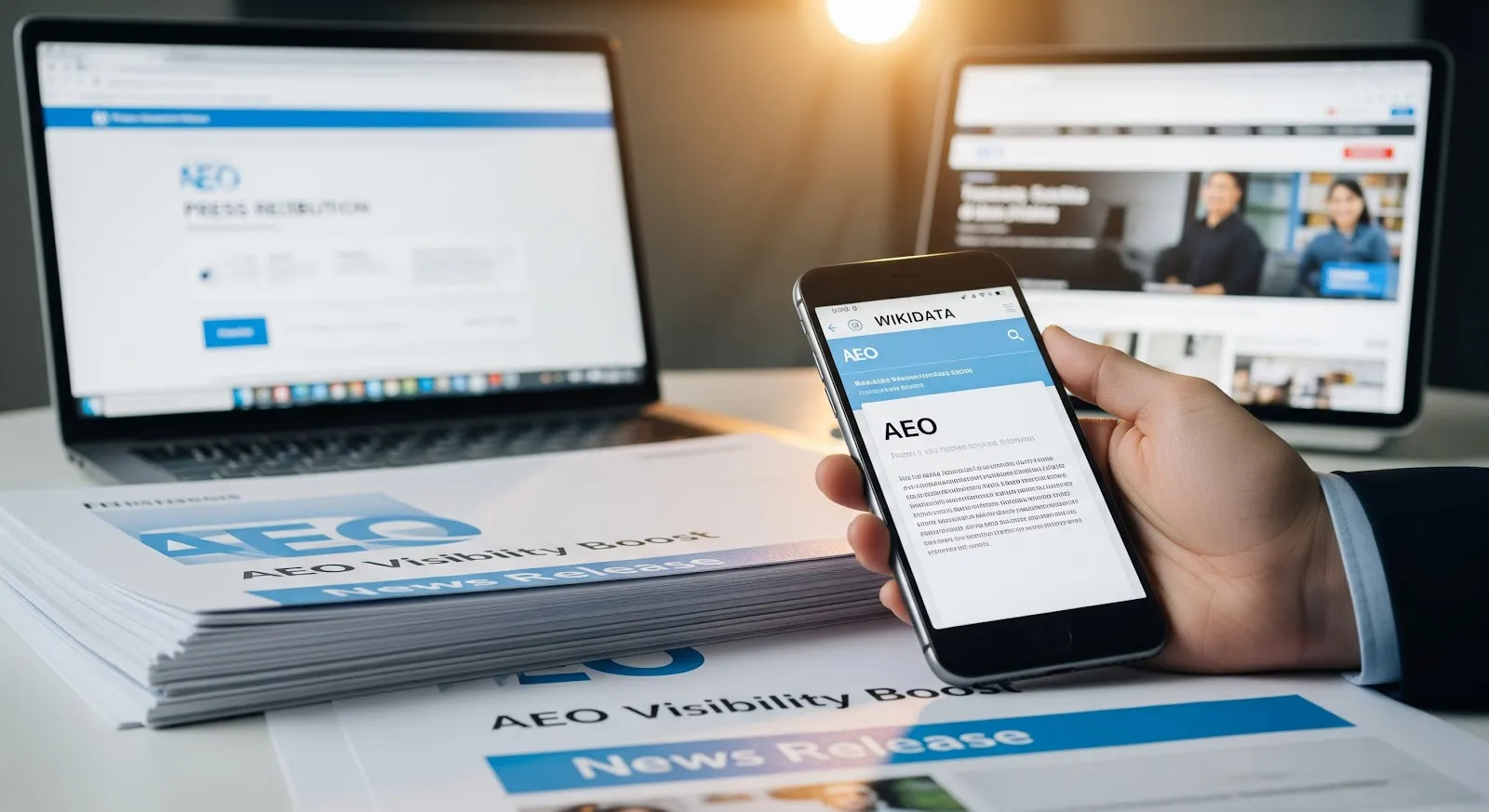
Yes. PR and Wikidata improve AI visibility as external validation: AI engines confirm a brand's claims by cross-referencing independent, high-authority sources, so widely acknowledged facts are more likely to be cited. Wikidata anchors your entity and prevents confusion with similar names. Zicy tracks whether that recognition shows up across ChatGPT, Gemini, Perplexity, Google AI Overviews and Google AI Mode.
On the traditional web, PR built reputation. On the AI-driven web, PR builds recognition. When your company appears in credible news sources or structured databases like Wikidata, it does not just reach audiences, it signals to AI engines that your brand is verifiable and trustworthy. That signal can improve your visibility in answer engine optimisation and generative engine optimisation results, because external mentions act as independent validation, helping AI confirm that your brand's claims are widely acknowledged rather than only self-published.
Why AI engines rely on PR and external references.
AI systems like ChatGPT, Gemini and Perplexity build their worldview from interconnected facts drawn from trusted data sources. Your website remains your primary authority, but AI validates your claims by cross-referencing them with third-party mentions. When multiple high-authority sites confirm the same information, models reinforce it as true, which is why a brand mentioned in reliable media is more likely to be cited: it already exists within the model's verified data clusters. This consensus effect, where repeated confirmation across independent sources increases confidence, also helps AI determine source hierarchy, prioritising domains with established authority and editorial standards. It is a core input to becoming an authoritative entity.
AI leans on what others say about you, not what you say about yourself.
- About 84% of AI citations come from earned media (journalism, reference, academic and other third-party sources), while paid and advertorial content is just 0.3% (Muck Rack, 25M+ links, 2026).
So the fastest way to be trusted by AI is to be covered, accurately, by sources it already trusts.
How Wikidata entries strengthen AEO signals.
Wikidata, the structured database behind Wikipedia, plays a critical role in how AI engines interpret entities. It is one of the few open, machine-readable repositories of global facts. When your brand has a verified Wikidata entry with accurate relationships, founder, headquarters, industry and website, AI can confidently identify your organisation across contexts. That entry becomes a semantic anchor linking your brand to other recognised entities such as partners, awards and products, which helps prevent confusion and ensures citations reference your brand, not a similarly named one. The schema that supports this is covered in which schema and entity markup matter most.
Wikipedia carries unusual weight, but unevenly.
- It is the single most-cited domain in ChatGPT, at about 7.8% of all citations, and makes up roughly 48% of ChatGPT's top sources, against only about 6% of Google AI Overviews' (Profound, 680 million citations, 2025).
- On Google AI Mode it appears in only about 2% of responses, versus more than 20% on ChatGPT (Semrush, 230,000+ prompts, 2025).
Wikidata matters because Google draws on it for its Knowledge Graph and knowledge panels, and a consistent, accurate entity record helps AI identify you and avoid confusing you with a similarly named company (MLforSEO, 2026).
Can traditional PR improve AEO visibility too?
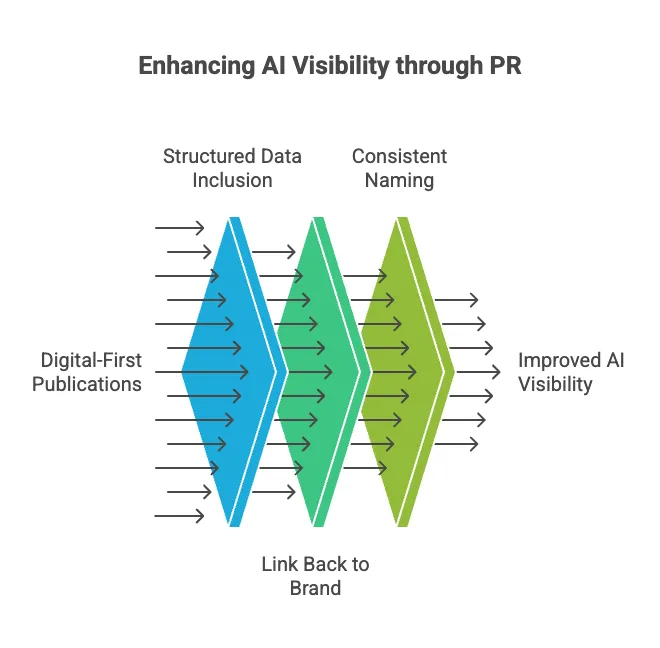
It can, but only when it is digitally structured and verifiable. Press releases distributed via wire services still matter, but for AI visibility, where and how they are published is the key:
- Focus on digital-first publications that are indexed by Google News and accessible to AI crawlers.
- Include structured data, such as NewsArticle schema, in your newsroom or blog posts.
- Link back to core brand and product pages to help AI connect topics to entities.
- Keep naming conventions consistent, with no variations of brand names, product titles or company details.
Each press mention acts as a citation pathway that strengthens your data authority. Publication quality matters: mentions from high-trust editorial domains carry more weight than low-authority or syndicated content, and consistency across mentions reinforces entity signals so AI connects every reference back to a single, unified brand identity.
One caution on press releases: distribution alone does almost nothing. In one test, syndicated wire releases appeared in 0 of 100 category answers across ChatGPT, Perplexity and Gemini, because AI cites the journalist's coverage, not the wire copy (Loganix, 100 queries, 2026). PR helps when it earns genuine editorial pickup, not when it is merely published.
What you control directly, and what you pursue.
It helps to separate the two levers, because they are not equally within your control. The
on-site part is the part you own directly: declaring your entity on your own pages and linking
it, through sameAs markup, to your official profiles and any external record such
as a Wikidata item. You can ship that today without anyone else's involvement. The off-site
part is a set of dependencies you pursue rather than control: getting a Wikidata item created
and accepted, and earning genuine PR and media coverage. Those depend on third parties,
editorial judgement and community review, so they take time and cannot be willed into
existence. The realistic sequence is to get the on-site sameAs markup correct
first, then work the off-site dependencies so that when a Wikidata item or a press mention does
appear, your own pages already corroborate it.
How to combine PR, data and AEO effectively.
Think of PR and structured data as two sides of credibility: PR gives you visibility in trusted human media, and structured data gives you legibility in machine media. When both align, verified news coverage linked to properly marked-up brand pages, you create a feedback loop that reinforces your authority in human and AI search alike, where each new validated mention increases the likelihood of future citations and builds a stronger entity footprint across more queries. PR builds awareness, structured data builds proof, and together they make your brand recognisable, cite-worthy and resilient. In the generative era, credibility is not claimed through keywords; it is earned through confirmation.
None of this can be bought outright. Wikipedia's own rule is that notability cannot be purchased: a page needs significant independent coverage, and paid editors must disclose who they work for (Wikipedia conflict-of-interest policy). And since 15 May 2026 Google treats manufactured authority signals as spam (Search Engine Land, 2026).
The honest play is to earn coverage and keep your entity data accurate, so PR, Wikidata and your own structured data reinforce each other. That is what Growth.pro's PAVA framework calls Authority, built on the brand's merits.
Questions about PR, Wikidata and AI visibility.
Does my brand need a Wikipedia page to be cited by AI?
No, but it helps where you qualify. Wikipedia is the most-cited domain in ChatGPT at about 7.8% of citations (Profound, 680 million citations, 2025), yet you cannot buy your way in: notability requires significant independent coverage (Wikipedia). Earned media and an accurate Wikidata entry lift visibility even without an article.
Do press releases actually help you get cited by ChatGPT and Perplexity?
Only when they earn coverage. Syndicated wire releases appeared in 0 of 100 category answers in one test, because AI cites the journalist's pickup, not the wire copy (Loganix, 100 queries, 2026). Aim for genuine editorial interest, not distribution volume.
What is Wikidata and how does it affect my Knowledge Panel and AI visibility?
Wikidata is an open, structured database of entities that Google draws on for its Knowledge Graph and knowledge panels (MLforSEO, 2026). An accurate Wikidata record helps AI recognise your brand and avoid confusing it with a similarly named company.
Is earned media or my own website more likely to be cited by AI?
Earned media, by a wide margin. About 84% of AI citations come from third-party sources, against a small share from brand-owned sites (Muck Rack, 25M+ links, 2026). Your site still matters for accuracy, but independent coverage does most of the citing.
See whether your PR and entity work is being recognised.
Zicy tracks how AI describes and cites your brand across ChatGPT, Gemini, Perplexity, Google AI Overviews and Google AI Mode.
