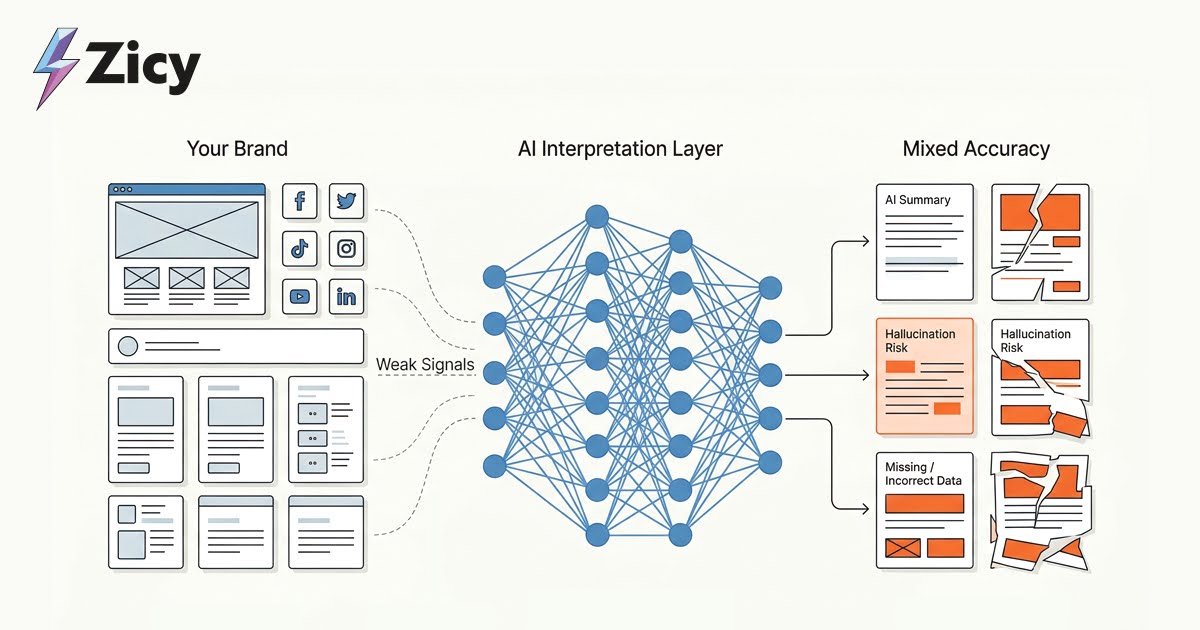
What if your eCommerce competitors aren’t outranking you on Google, but AI systems are still recommending them more often?
The real competition isn’t page one anymore, but who shows up in ChatGPT answers, Gemini summaries, and AI shopping recommendations.
That was the blind spot for this eCommerce brand. Search performance looked stable. Conversions were healthy. But AI-driven discovery? Completely invisible.
Using Zicy, the brand stopped guessing how AI systems perceived them and started measuring, comparing, and correcting it.
Results Snapshot (Measured via Zicy)
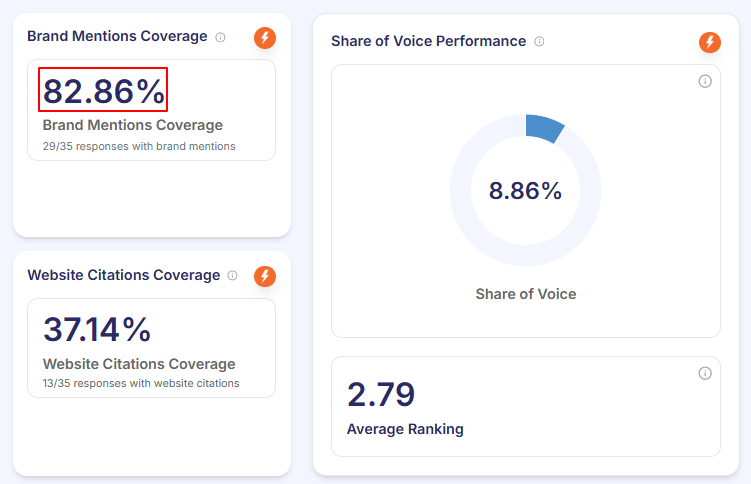
AI Visibility & Brand Presence
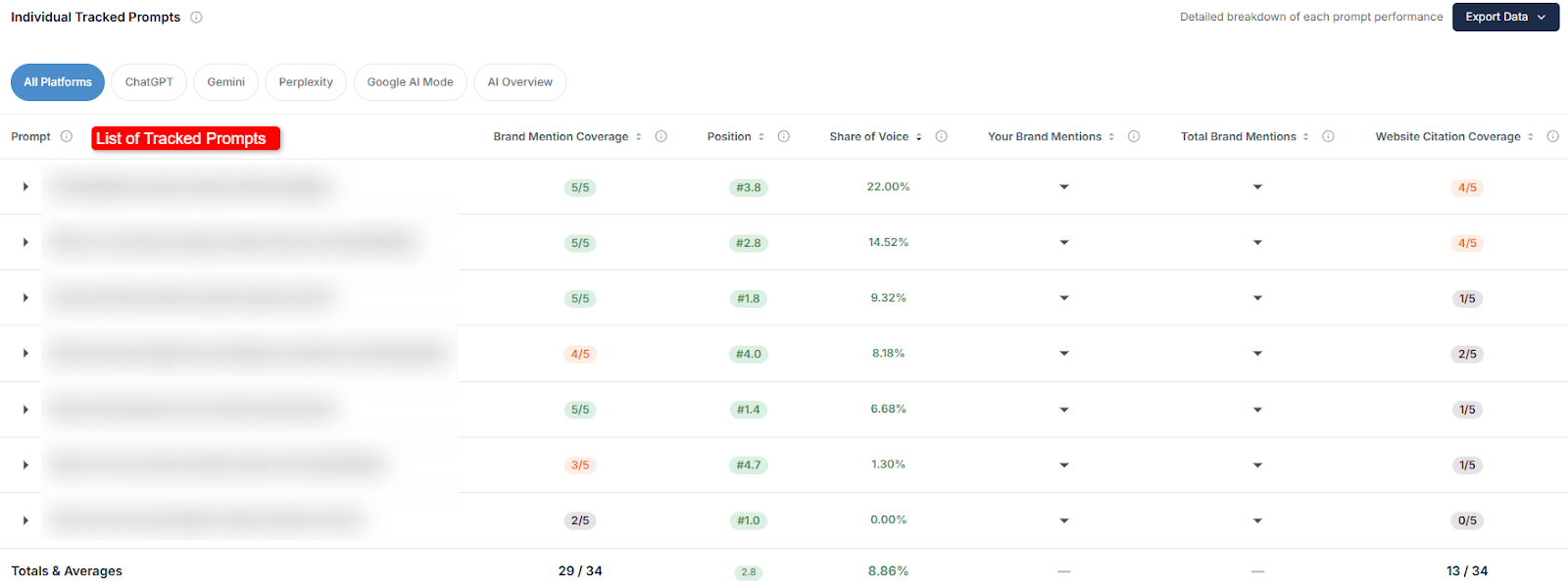
- Brand Mention Coverage: 82.86%
- Website Citation Coverage: 37.14%
- Average AI Ranking: 2.79 across tracked prompts.
- Share of Voice: 8.86%, the highest among tracked competitors.
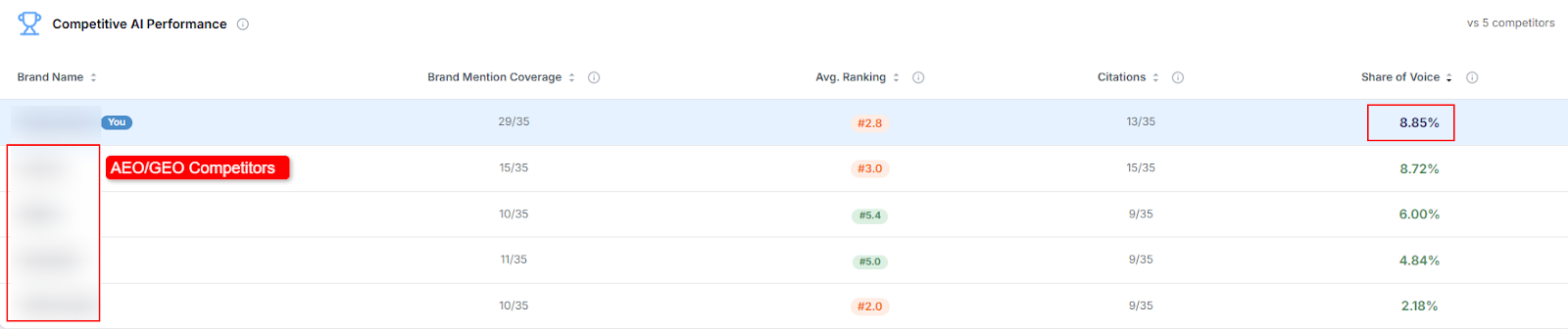
Competitive AI Performance
- Ranked #1 in Share of Voice against 5 direct eCommerce competitors.
- Outperformed competitors on brand mentions, citation presence, overall AI recommendation visibility.
Prompt-Level Visibility
- Strong presence across commercial and evaluative prompts.
- Multiple prompts achieving 5/5 brand mention coverage, top-3 AI positions.
What We Did (Strategy Breakdown)
- Competitive AI Benchmarking
- Compared the brand vs competitors across mentions, citations, rankings, and share of voice.
- Identified where competitors were winning without higher search rankings.
- Prompt-Level AEO Analysis
- Tracked real buyer-style prompts used in AI systems.
- Mapped which prompts triggered brand mentions, and which didn’t.
- Used gaps to prioritise optimisation.
- Brand–Entity Reinforcement
- Strengthened brand-product associations so AI systems could confidently reference the site.
- Reduced ambiguity that often causes AI to cite “neutral” competitors instead.
- Continuous Visibility Monitoring
- Monitored changes in AI rankings and mentions over time.
- Used movement (not assumptions) to validate optimisation impact.
Why Tracking This Matters Now?
- AI systems don’t “rank” brands the way search engines do. They recommend.
- Visibility loss doesn’t show up as a traffic drop until it’s already too late.
- Without tracking:
- You don’t know which prompts you’re losing.
- You don’t know which competitor AI prefers.
- You don’t know why.
- With tracking:
- Optimisation becomes targeted, not reactive.
- Competitive gaps become measurable, not anecdotal.
The Shift This Case Study Makes Clear
This brand didn’t overhaul its entire site. They simply answered one question clearly: “How does AI see us compared to everyone else?”
Once that was visible, improvement became inevitable.
As eCommerce discovery shifts from search results to AI answers, brands that measure AI visibility early won’t just compete better, but will be recommended more often.
By tracking AI visibility with tools such as Zicy, brands can replace assumptions with evidence as discovery models change.
For more AEO/GEO case studies, visit us at
https://www.zicy.com/case-studies