AI-driven discovery is no longer limited to product recommendations.
For service-based organisations, especially in knowledge-led sectors, AI systems increasingly shape which brands are surfaced, referenced, and compared.
This case study looks at how an education sector services provider used AI visibility measurement to understand where it appeared in AI-generated answers, and how that visibility translated into meaningful year-over-year traffic growth.
Results Snapshot (Zicy + GA4)
AI Visibility & Authority Signals
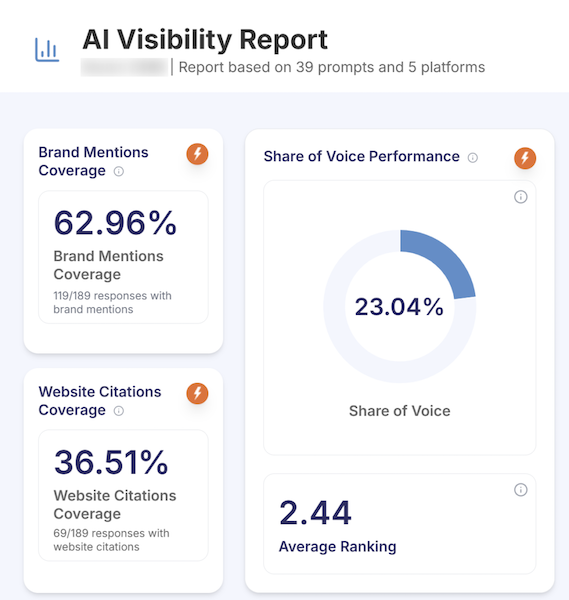
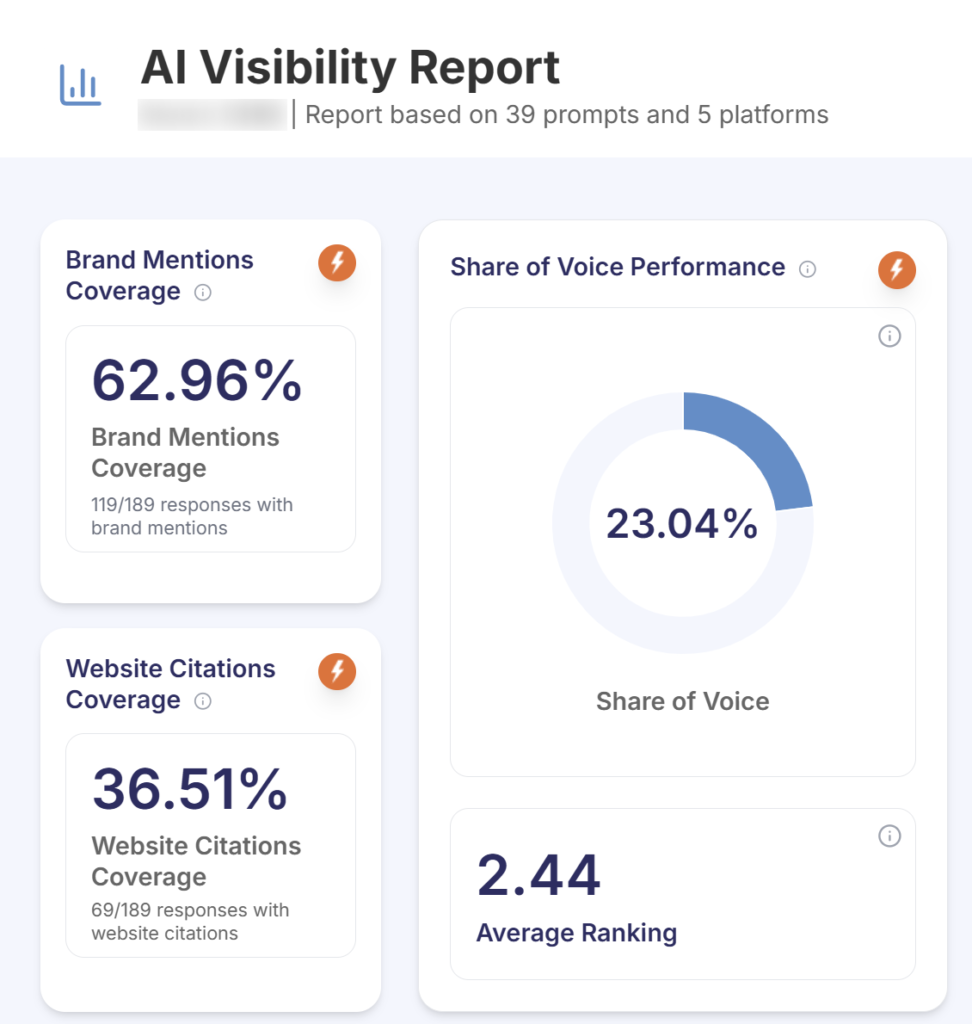
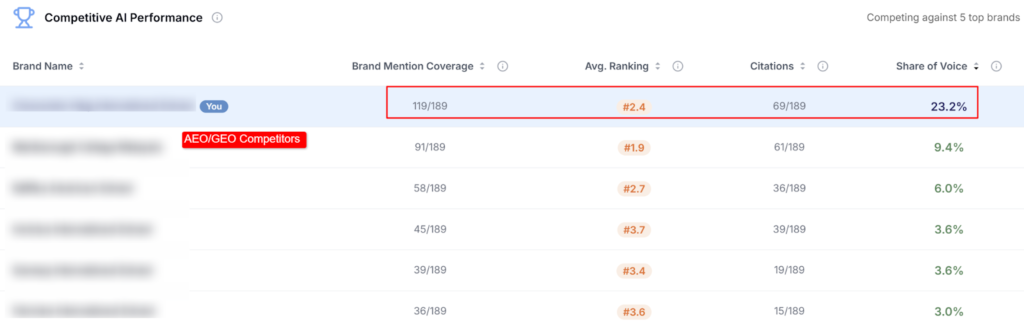
- Brand Mention Coverage: 62.96%
- Website Citation Coverage: 36.51%
- Average AI Ranking: 2.44 across tracked prompts.
- Share of Voice: 23.04%, the highest among competing brands.
Competitive AI Performance
- Ranked #1 in AI Share of Voice against 5 competitors.
- Most consistent visibility across brand mentions, website citations, and top-3 AI rankings.
Year-over-Year AI Traffic Impact (GA4)
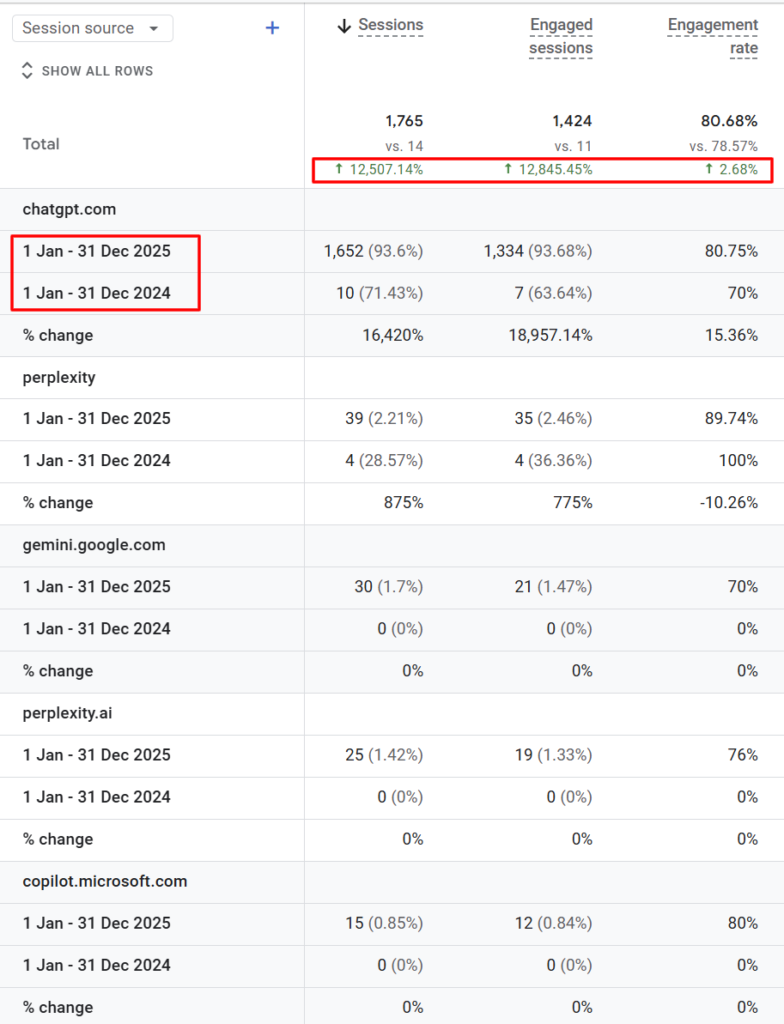
- AI-driven sessions increased by over 12,507% YoY (2024 vs. 2025).
- Engaged sessions grew by more than 12,845%.
- ChatGPT emerged as the dominant AI traffic source, with incremental growth from Perplexity and Gemini.
What Was Done (Strategy Breakdown)
- AI Visibility Baseline
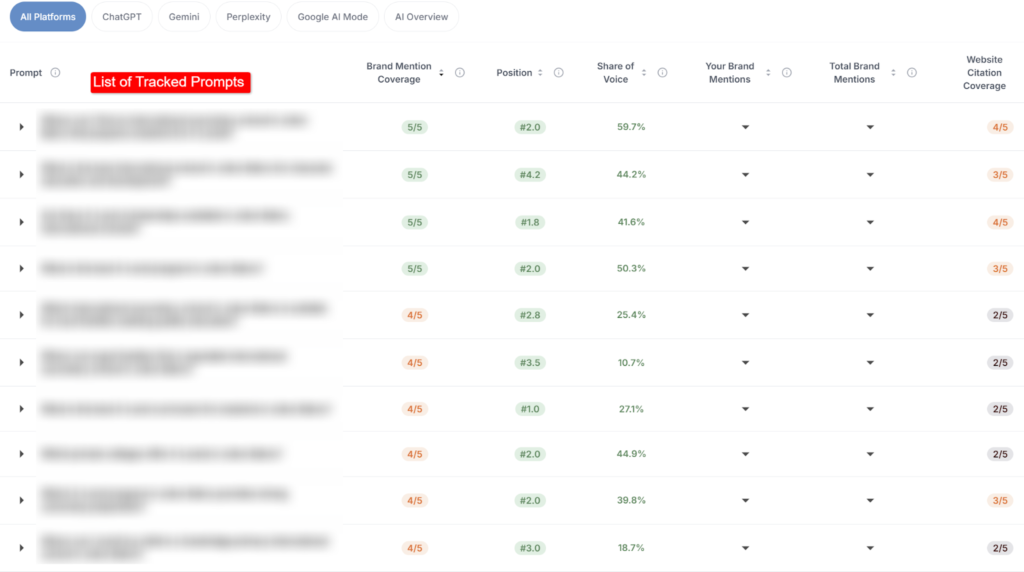
- Measured brand presence across 39 real-world prompts and 5 AI platforms.
- Established benchmarks for mentions, citations, rankings, and share of voice.
- Identified where competitors were referenced instead, despite similar positioning.
- Prompt-Level Performance Analysis
- Tracked how individual prompts performed across platforms.
- Highlighted prompts with strong rankings but weak brand mentions.
- Used these gaps to prioritise optimisation efforts.
- Authority & Clarity Alignment
- Refined key service pages to improve attribution clarity.
- Strengthened brand–entity signals relied on by AI systems.
- Reduced ambiguity that often leads to generic or competitor citations.
- Continuous Measurement
- Monitored visibility trends over time rather than relying on one-off snapshots.
- Used changes in rankings, mentions, and citations to validate progress.
Why Tracking AI Visibility Matters for Service Brands
- AI systems increasingly act as filters, not just information sources.
- Visibility gaps often don’t show up in traditional analytics until later stages.
- Without AI visibility tracking:
- Brands don’t know where they’re excluded from recommendations.
- Competitive losses happen quietly.
- With tracking:
- Visibility becomes measurable.
- Optimisation aligns with real discovery behaviour, not assumptions.
This organisation didn’t focus on chasing rankings alone. They focused on understanding how AI systems surface, compare, and reference brands in their category.
Platforms like Zicy help make this layer observable, so organisations can adapt as discovery models continue to evolve.
For more AEO/GEO case studies, visit us at [https://www.zicy.com/case-studies](https://www.zicy.com/case-studies)