When AI compares service providers in your category, where do you appear?
In B2B industries, discovery often begins with research-heavy queries and comparisons, “best provider” searches, and service-specific questions.
This provider wanted to answer a simple but strategic question: How visible are we inside AI-generated answers when buyers evaluate options?
Instead of guessing, they tracked it.
AI visibility snapshot (Results using Zicy)
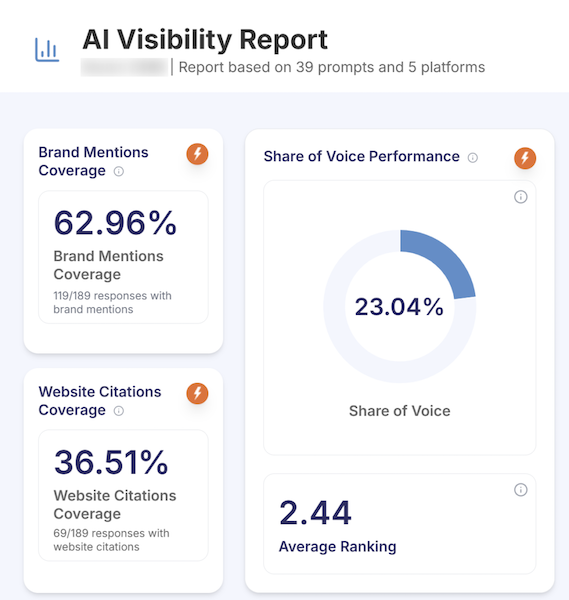
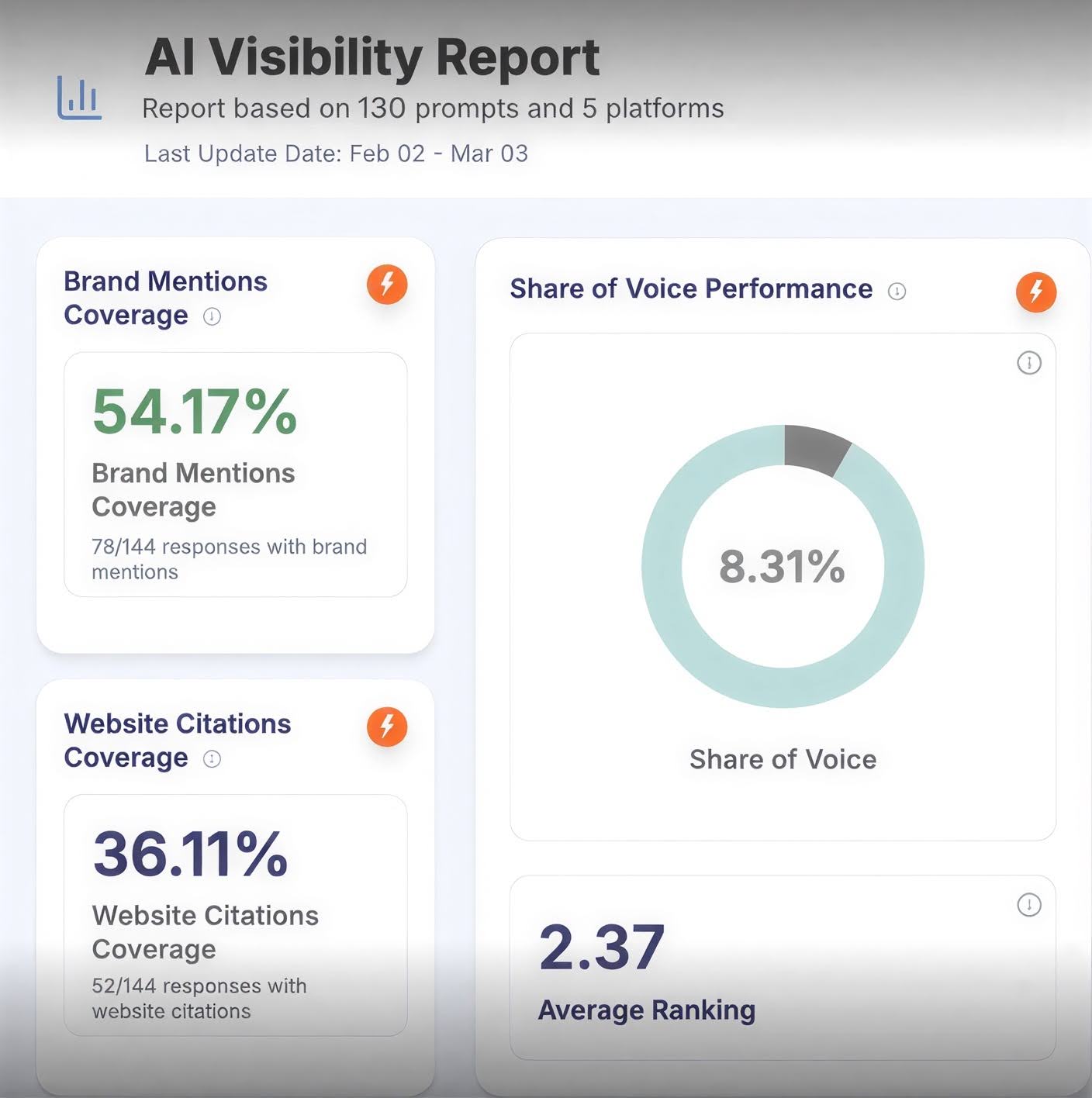
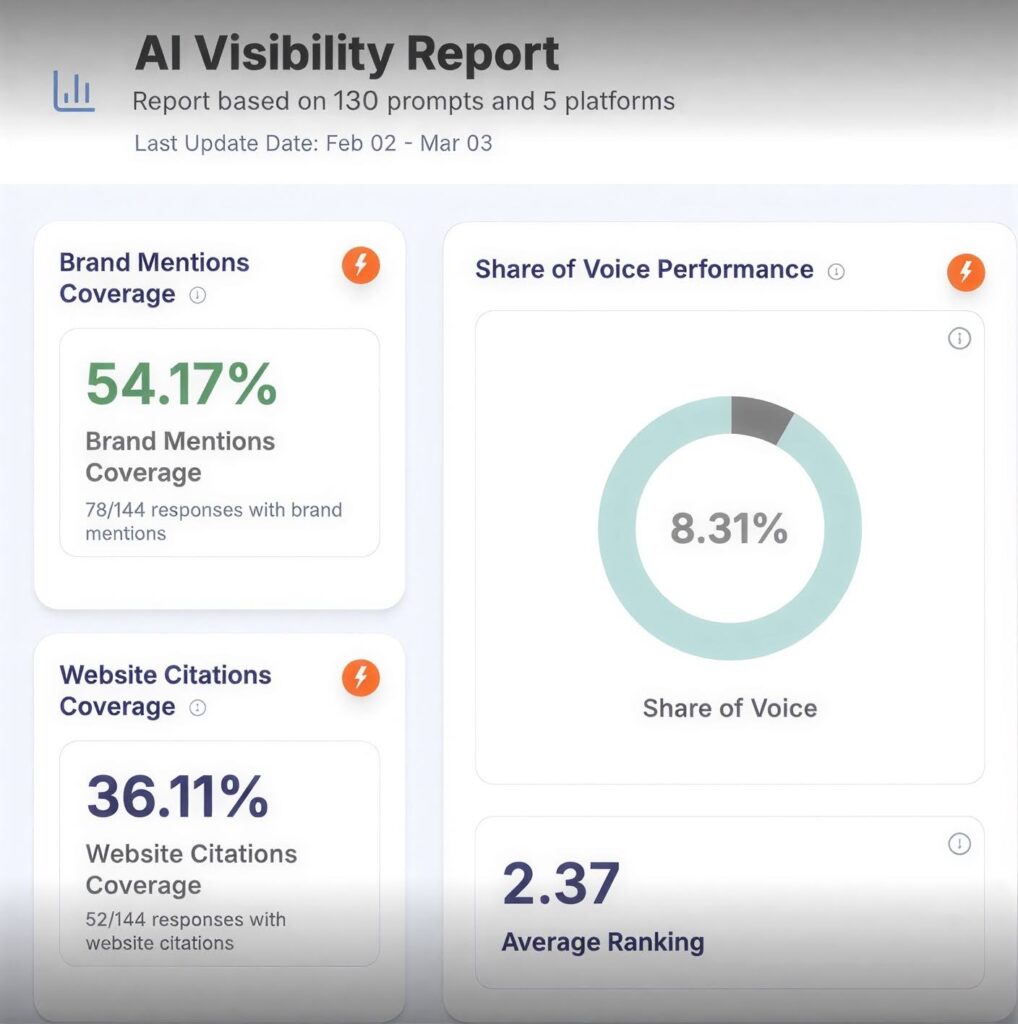
Across 130 tracked prompts and 5 AI platforms, the performance baseline showed:
- Brand Mention Coverage: 54.17% (78 out of 144 responses included the brand)
- Website Citation Coverage: 36.11% (52 out of 144 responses directly referenced official URLs)
- Share of Voice: 8.31%
- Average AI Ranking: 2.37
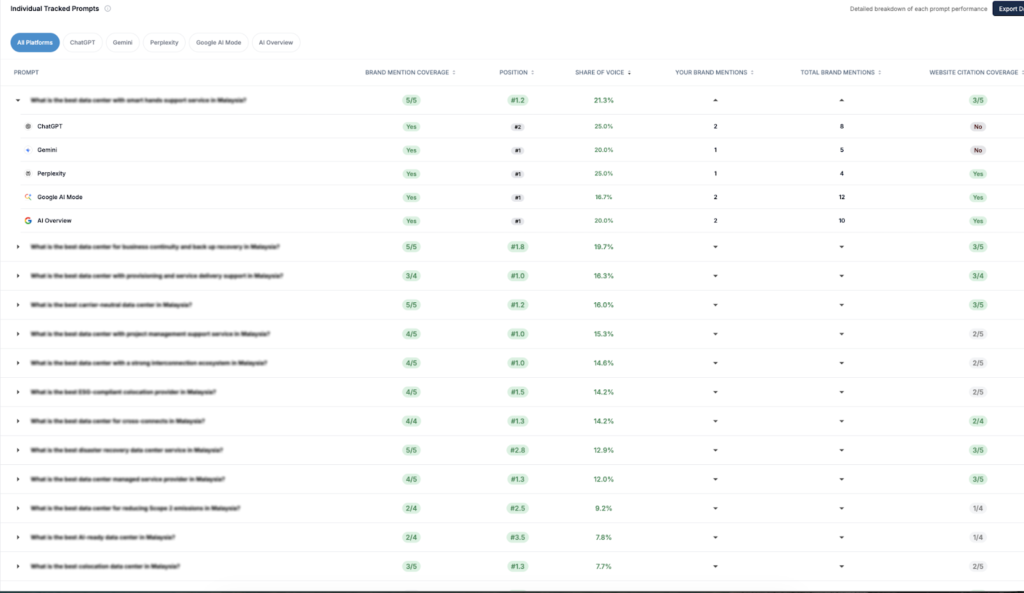
Tracking individual queries revealed:
- Strong presence on high-intent “best provider” searches.
- Strong brand mention coverage on ChatGPT, Gemini, Perplexity, Google AI Mode, and AI overviews.
- Consistent top-three positioning.
- Higher share of voice on service-specific prompts.
What changed strategically
Rather than focusing on volume, the strategy focused on precision and reinforcement.
- Query-Specific Content Alignment
- Mapped tracked prompts to existing service pages.
- Strengthened structured answer sections.
- Reduced generic positioning language.
- Citation Optimisation
- Improved clarity of service explanations.
- Added clearer attribution signals within core pages.
- Enhanced internal linking for contextual reinforcement.
- Ranking Stability Focus
- Monitored weekly ranking movement.
- Prioritised prompts fluctuating outside top positions.
- Adjusted content framing to improve summarisation probability.
- Platform-Wide Monitoring
- Compared performance across platforms.
- Identified where competitor mentions were stronger.
- Focused optimisation on prompts with competitive pressure.
And why this level of tracking matters
In B2B decision cycles:
- AI tools increasingly shape early vendor shortlists.
- Buyers trust brands repeatedly surfaced across platforms.
- Visibility gaps rarely show up in traditional analytics.
- Citation frequency influences perceived authority.
Without structured AI visibility tracking:
- You may rank on Google, but be absent in AI answers.
- Competitors may be cited where you are not.
- Share of voice shifts go unnoticed until pipeline impact appears.
With tracking:
- Authority becomes measurable.
- Prompt-level weaknesses become actionable.
- Competitive positioning becomes transparent.
The broader shift..
B2B discovery is evolving quietly.
Buyers are asking AI to compare, recommend, summarise, and shortlist before visiting a website.
The brands that understand how they appear inside those AI responses will adapt faster than those measuring search rankings alone.
Tools like Zicy exist to surface that layer, so visibility inside AI answers becomes something you can track and improve.
For more AEO/GEO case studies, visit us at https://www.zicy.com/case-studies