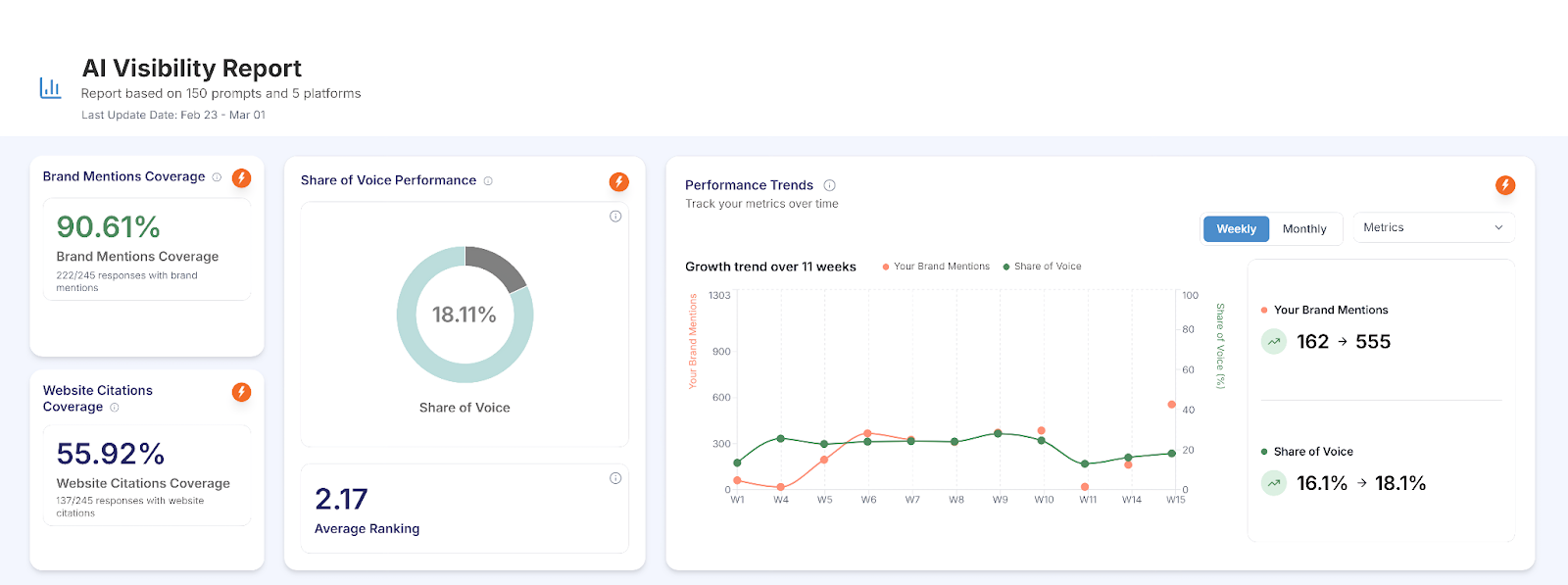
If AI were asked to recommend institutions in your category today, would your brand make the shortlist?
For this education-sector client, AI visibility was inconsistent across platforms.
The results show what structured AEO execution can achieve.
Results Snapshot (Zicy AI Visibility Report + Analytics)
AI Visibility & Authority Signals
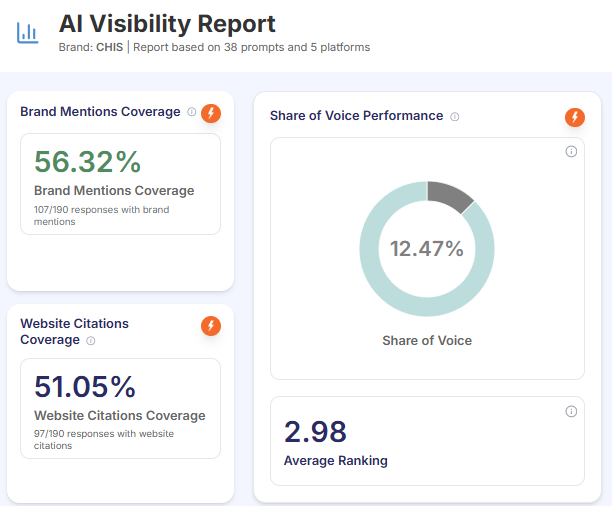
- Brand Mention Coverage: 56.32%
- Website Citation Coverage: 51.05%
- Share of Voice: 12.47%
Average AI Ranking: 2.98 across tracked prompts
Competitive Positioning (Top 5 Brands Tracked)
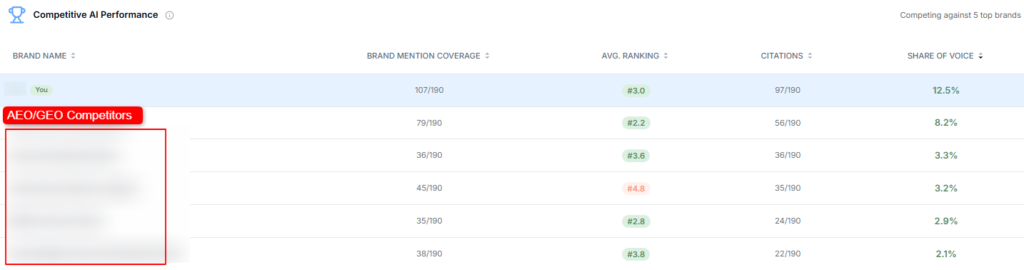
- Brand ranked within Top 3 positions on average.
- Achieved 12.5% Share of Voice, outperforming competitors at 8.2%, 3.3%, 3.2%, and below.
- Highest overall citation volume among tracked brands (97 citations).
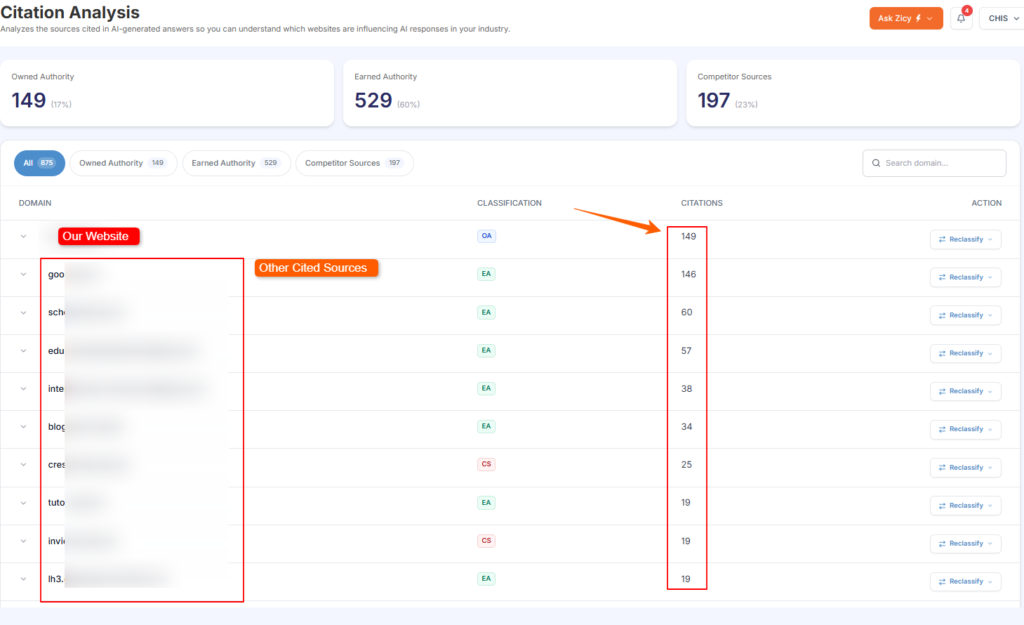
Citation Analysis
- 149 Owned Authority citations.
- 529 Earned Authority citations.
- 197 Competitor citations monitored.
This gave clarity on influence, not just mentions.
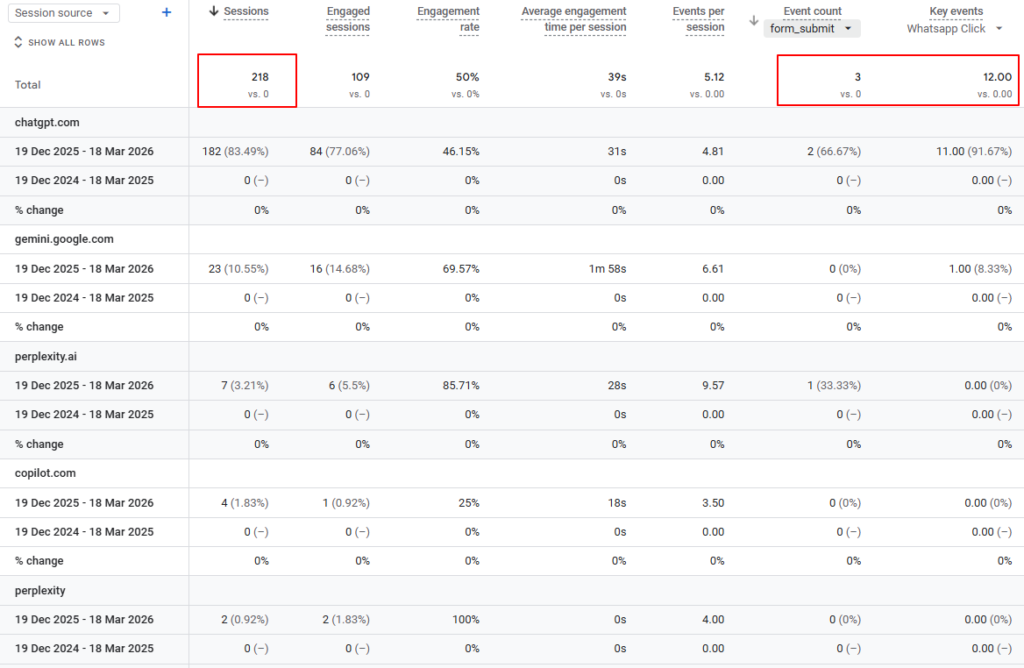
AI Traffic Impact (GA4 – Dec 19 to Mar 18)
- 218 AI-driven sessions
- 109 engaged sessions
- 50% engagement rate
- AI traffic contributed to form submissions, WhatsApp enquiries, and multi-session engagement.
What We Changed (Strategy)
1. Prompt-Level Visibility Mapping
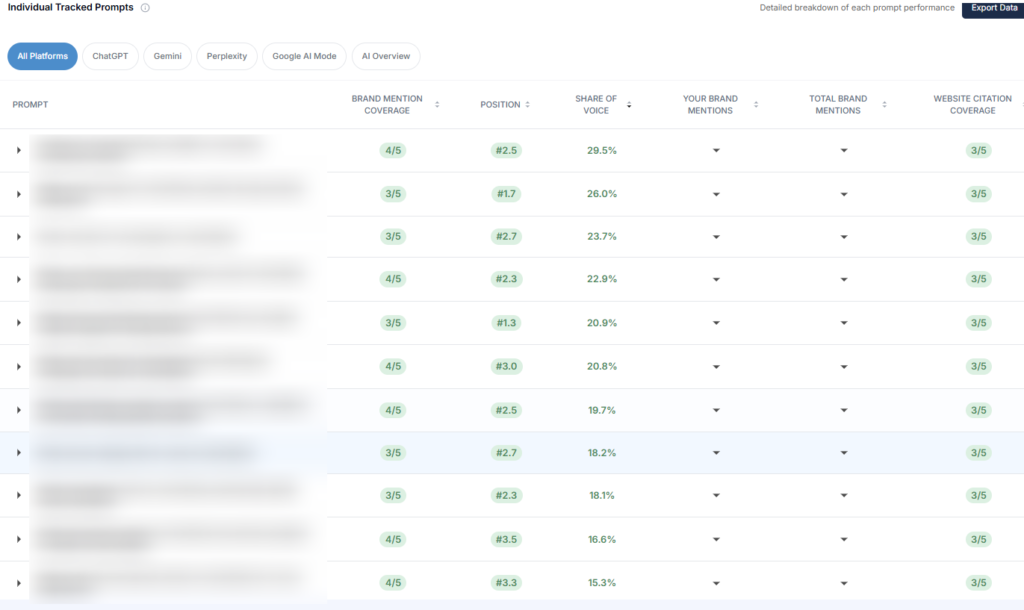
- Tracked 38 high-conversion-intent prompts across 5 major AI platforms.
- Identified specific gaps in mention density and citation frequency.
- Prioritized prompts that signaled strong commercial intent from prospective students.
2. Entity Strengthening & Structured Authority
- Reinforced institutional positioning by implementing:
- Clear definitional statements to help AI categorize the brand accurately.
- Program-specific structured sections for better indexing and retrieval.
- FAQ blocks specifically aligned with AI extractability requirements.
3. Citation Ecosystem Expansion
- Analyzed the balance between “Earned Authority” (third-party mentions) vs. “Owned Authority” (brand-controlled content).
- Strengthened the technical authority of pages most likely to be used as primary citations by LLMs.
4. Share of Voice Optimisation
- Identified specific query clusters where competitors were appearing more frequently.
- Optimized content for comparison-style queries (e.g., “Brand A vs Brand B”).
- Improved contextual relevance to ensure inclusion inside multi-brand AI recommendations.
5. AI Traffic Measurement
- Connected AI brand mentions to actual website sessions and engagement metrics.
- Measured event triggers such as form submissions and WhatsApp inquiries.
- Shifted from “visibility vanity” to focusing on measurable student intent.
Why Tracking AI Visibility Matters
Education is a high-consideration journey. When AI answers specific student queries, such as:
- “Best institutions for X program”
- “Top colleges for Y field”
- “Where to study Z in [location]”
The brand that appears repeatedly becomes the default recommendation.
The Risks of Staying “Blind” to AI:
- Zero Awareness: You don’t know if your brand is even being mentioned in AI-driven searches.
- Citation Loss: You don’t know who is being cited as the authority instead of you.
- Influence Gaps: You can’t identify which specific prompts are driving market influence.
- Competitive Risk: You can’t defend your brand against competitors actively shaping AI narratives.
Winning here is not about writing longer blogs; it’s about structured, extractable authority. If your institution has a visibility gap, it is measurable—and once it’s measurable, it’s optimisable.
For more AEO/GEO case studies, visit us at: https://www.zicy.com/case-studies