This is the second article in a three-part series on how brands can measure the effectiveness and ROI of their AI visibility.
In questa serie, suddivido l'attribuzione dell'IA in tre livelli:
- Parte 1: ROI diretto
- Parte 2: Alla ricerca di Halo
- Parte 3: L'alone della sotto-entità
In Part 1, I focused on ROI diretto: the clearest and most observable form of attribution. A user sees your brand in an AI-generated answer, clicks through to your website, and converts.
But that is only one layer of AI influence.
A large part of AI’s impact does not happen through a direct referral click. Instead, AI introduces the brand, shapes interest, and influences preference earlier in the journey.
The user then comes back through another route: most often branded search, direct traffic, or another later visit.
Ecco dove Search Halo diventa utile.
It helps explain what happens when AI influences demand, but does not own the final click.
Why Direct Clicks Do Not Tell the Full Story
One of the most common mistakes brands still make is evaluating AI performance too narrowly.
Loro chiedono:
How much traffic did AI send directly to our website?
That is a reasonable place to start as mentioned in part 1 of this series. But it is too limited as the full measurement model.
It assumes AI only matters when a user clicks immediately from a platform like ChatGPT, Gemini, or Perplexity and lands on your site in the same session.
And since AI traffic is still low in comparison to other channels, brands may choose to ignore this channel. However, ignoring AI traffic can be detrimental to their overall brand and bottom line because of how brand influence works.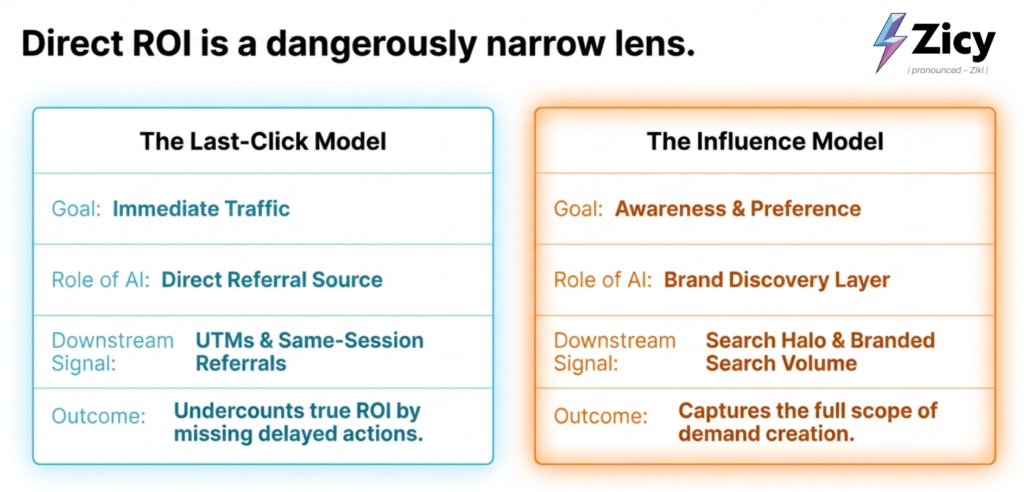
A user may discover your brand through AI, but choose not to click in that moment. They may want to verify the recommendation first. They may want to compare you against other options. They may simply leave and come back later.
What happens next often looks more familiar:
- they search your brand on Google
- they type your URL directly
- they revisit through another channel
- and then they convert
In that journey, AI still played an important role. It shaped awareness before the website visit happened. Without the awareness, the visit or conversion will never happen.
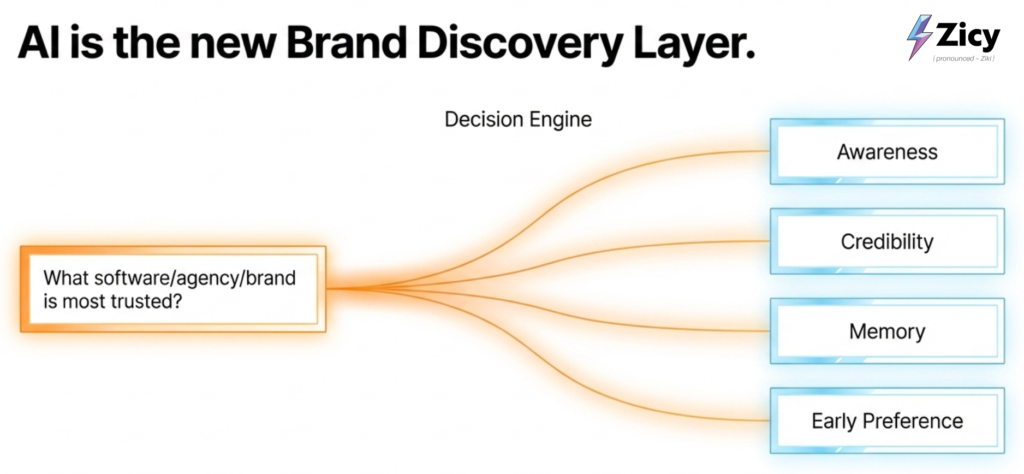
AI Is Becoming a Brand Discovery Layer
This is one of the more important behavioural shifts happening right now.
AI is no longer just answering informational queries. It is increasingly influencing how users discover, shortlist, and evaluate brands before a site visit ever happens.
A user might ask:
- What is the best software for this use case?
- Which agency is strongest in this category?
- What skincare brand is most trusted?
- Which provider should I consider for this service?
If your brand appears in that answer, it matters.
That moment can shape:
- consapevolezza
- credibilità
- memoria
- and early preference
But the user may still not click your site directly from the AI interface. Instead, they may do something more natural. They search for your brand later.
This is what makes AI attribution more difficult to read using traditional models. AI may create the demand, while another channel receives the credit.
Why Branded Search Becomes the Key Downstream Signal
This is where branded search becomes especially important.
A user sees your brand in an AI answer. They do not click immediately. Later, they search for your brand name on Google.
That increase in branded search activity is often one of the clearest downstream signs that AI visibility is turning into real interest.
This matters because branded search is not just traffic. It reflects something more valuable:
- riconoscimento
- ricordare
- intento
- fiducia
- and active consideration
In other words, branded search is often a demand signal.
And in the AI era, that demand may increasingly be shaped upstream by AI visibility.
What Search Halo Means
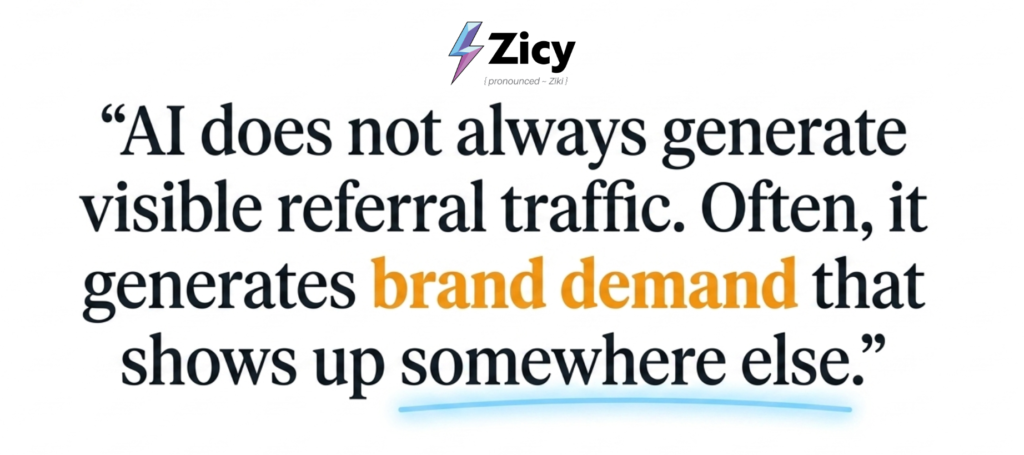
A useful way to think about this is as a halo effect around branded search.
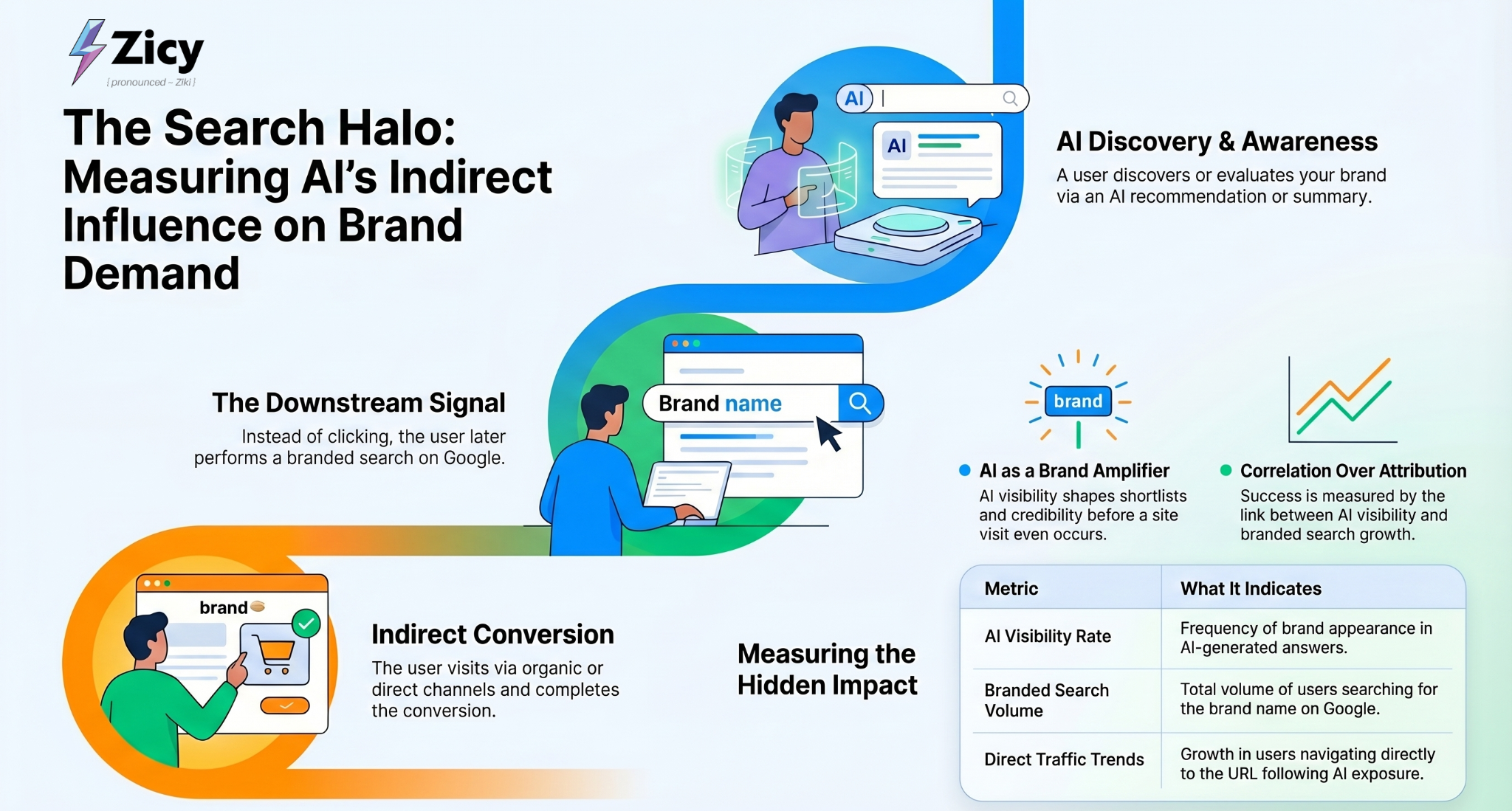
Search Halo is the lift in branded search activity that happens after users discover your brand in AI-generated answers.
The journey often looks like this:
- A user asks an AI platform for recommendations.
- Your brand appears in the answer.
- The user leaves the AI interface.
- The user later searches your brand on Google.
- They visit your website through branded organic search, direct traffic, or another route.
- They convert.
This is still an AI influenced traffic and conversions.
The AI platform may not appear as the final source in analytics, but it helped create the interest that led to the later search and visit.
That is the point many teams still miss.
Why This Matters for Brand and Growth Teams
This matters because AI is increasingly functioning less like a pure traffic channel and more like an upstream influence layer.
Può:
- introduce your brand earlier in the journey
- reinforce trust through recommendation
- shape shortlist and comparison behaviour
- increase branded search demand
- and support conversions without receiving direct attribution
That makes AI especially relevant for teams responsible for brand, growth, and demand generation.
Because from a reporting perspective, the conversion may appear under:
- branded organic traffic
- traffico diretto
- utenti di ritorno
- or even another later touchpoint
But the original spark may still have come from AI.
If brands only measure direct AI referral traffic, they are likely understating AI’s actual impact.
Search Halo Helps Close the Attribution Gap
No attribution model will make this perfectly clean. Customer journeys are messy. They always have been.
But Search Halo gives brands a more realistic second layer of measurement. It helps answer a different question from Part 1.
ROI diretto risposte:
Did AI send traffic that converted directly?
Search Halo risposte:
Did AI create interest that later turned into branded search, traffic, and conversion?
That is a much more useful way to understand AI’s role in discovery. Because in many cases, AI does not behave like a last-click channel. It behaves more like a brand amplifier.
How to Measure Search Halo More Realistically
The goal is not perfect attribution. The goal is to build a more intelligent view of influence.
A practical approach is to connect multiple signals.
1. Track AI Visibility
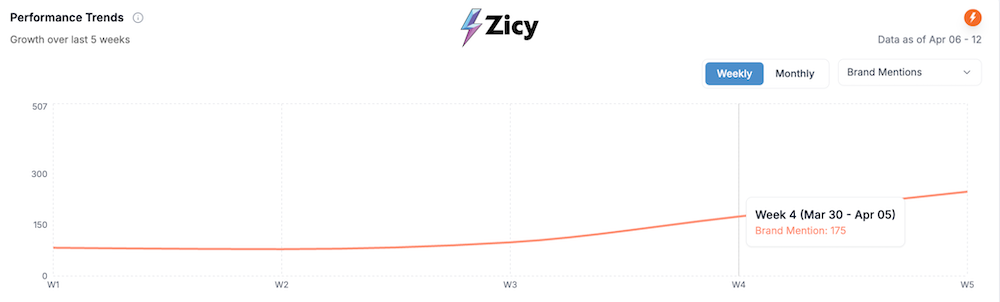
Start by understanding whether your brand is actually appearing in relevant AI-generated answers using AI Search Analytics like Zicy.
If AI visibility is not measured, there is no halo to measure.
2. Track Branded Search Trends
Then look at whether branded search volume is increasing over time using Google Search Console.
If users are searching for your brand more often as AI visibility rises, that is an important signal of a positive correlation.
3. Compare Against Traffic Behaviour
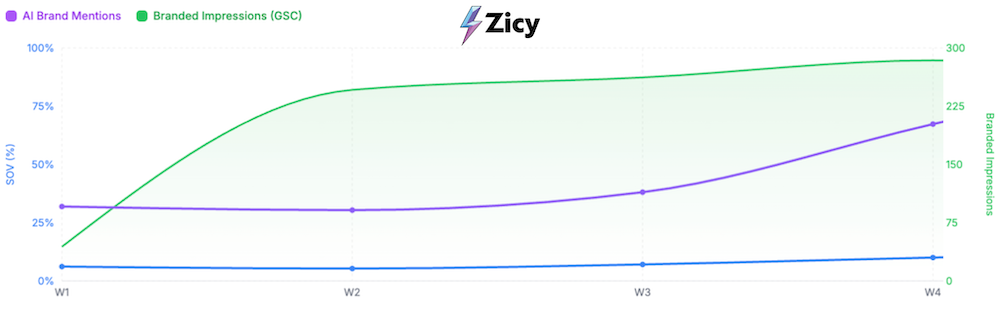
Next, look at whether the increase in branded search is translating into:
- more branded organic visits (branded clicks from Google Search)
- more direct traffic
- more returning users
- and stronger conversion activity from these visits
4. Estimate the Role of Branded Intent
A practical way to think about this is to estimate how much of your organic conversion volume is tied to branded intent.
Se:
- branded search is rising
- branded organic visits are increasing
- AI visibility is also rising over the same period
then AI is likely contributing to those conversions indirectly.
This is not a perfect attribution. But it is a more realistic reflection of how modern discovery actually works.
What Brands Should Actually Watch
The most useful signals here are:
AI Visibility Rate
- How often your brand appears in relevant AI-generated answers across key queries.
- Fonte: AI visibility tracking and prompt monitoring tools like Zicy, or manual query tracking across ChatGPT, Gemini, Perplexity, etc
Volume di ricerca del marchio
- The number of users actively searching for your brand name over time.
- Fonte: Google Search Console → Performance → Queries filtered by brand terms; Google Trends for directional validation
Branded Share of Organic Clicks
- The proportion of your organic traffic that comes from brand-specific searches rather than generic queries.
- Fonte: Google Search Console → Compare branded vs non-branded queries by clicks
Direct Traffic Trends
- Changes in users visiting your site directly, often reflecting increased brand recall and familiarity.
- Fonte: GA4 → Reports → Acquisition → Traffic acquisition → Session default channel group = Direct
Organic Conversion Trends
- How well your organic traffic is converting, especially as branded demand increases.
- Fonte: GA4 → Explore or Reports → Filter by Organic Search → Track key events / conversions)
Correlation between AI Visibility and Branded Search Over Time
- Whether increases in AI visibility align with growth in branded search, indicating AI-driven demand.
- Fonte: Combine AI visibility data with GSC branded query trends over time — typically via spreadsheet or dashboard comparison)
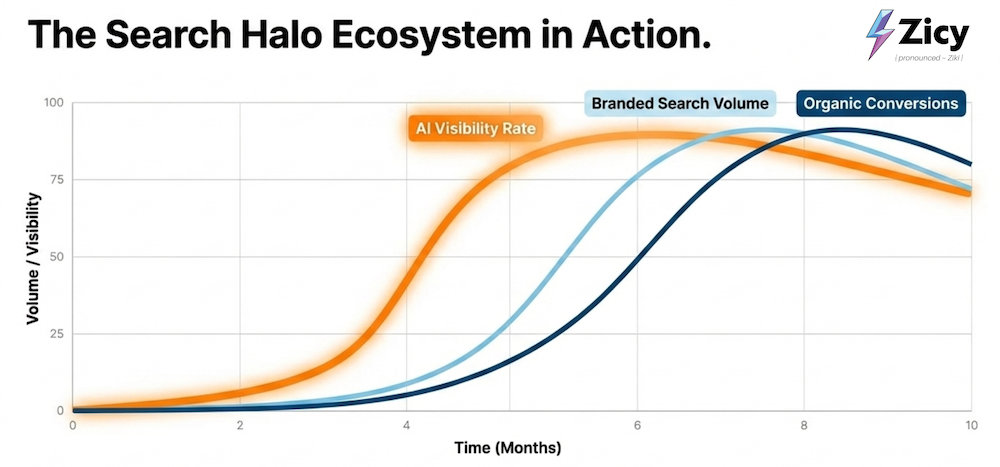
When these signals move together, you are not just looking at isolated channel performance.
You are seeing evidence that AI visibility may be creating downstream brand demand.
Questo è ciò che Search Halo è progettato per catturare.
The Bigger Strategic Shift Behind This
The bigger implication is that attribution is slowly moving from a click-based model to an influence-based one.
Brands are no longer competing only for clicks inside search results.
They are increasingly competing for presence inside:
- Raccomandazioni generate dall'intelligenza artificiale
- sommari
- confronto
- and synthesized answers
That presence shapes who gets remembered, who gets searched, and who gets chosen later.
This is why measuring AI visibility only through direct referral traffic is too narrow.
La domanda migliore è:
Is AI increasing branded demand for our brand, and is that demand showing up in traffic and conversions over time?
That is the measurement mindset brands need now.
Why Search Halo Is the Right Second Layer
ROI diretto is still the cleanest place to start. But it only captures the cases where AI owns the click.
Search Halo captures the next layer when AI influences the decision, but another channel receives the final credit.
That makes it a necessary second step in any serious AI attribution model.
It expands the view beyond what is directly visible and helps brands start measuring AI as an influence engine, not just a referral source.
Considerazioni finali
In the AI search era, the customer journey is becoming less linear and more distributed.
Users do not always go from discovery to click to conversion in a single path.
Possono:
- discover a brand in AI
- verify it through Google
- return later through direct traffic
- and convert through a journey that traditional attribution models oversimplify
That is why Search Halo matters.
It helps brands see the hidden impact of AI even when no direct link is clicked.
It offers a more realistic view of how AI visibility shapes consideration, branded demand, and downstream conversion behaviour.
Brands that understand this early will have a much better read on what is actually driving growth.
And once this layer becomes clear, the next question becomes more specific:
Can AI visibility also create measurable demand for individual products, services, or business lines, not just the parent brand?
That is what Part 3 will explore.
Autore: Aprile Cheong
Responsabile principale del prodotto, co-fondatore di Zicy.com
Responsabile AEO/GEO, Growth.pro